HRV vs. Heart Rate: The Difference Between Frequency and Fluctuation

## 30-Second Summary
- **Heart rate (HR)** tells you *how fast* your heart is beating—measured in beats per minute. **Heart rate variability (HRV)** tells you *how much variation* exists between consecutive heartbeats—measured in milliseconds.
- HR reflects the **average output** of your autonomic nervous system; HRV reflects the **dynamic interplay** between its sympathetic (“fight or flight”) and parasympathetic (“rest and digest”) branches .
- While a fast or slow heart rate gives you one data point, HRV reveals **how well your body adapts to stress, recovery, and environmental demands**.
- **Low HRV is an ominous sign** associated with increased mortality risk—patients with persistently low HRV have been found to have up to **three times greater mortality** than those with normal HRV levels .
- HRV and HR are **mathematically and physiologically intertwined**—a slower heart rate tends to have higher variability, partly due to the non-linear relationship between RR intervals and heart rate .
---
## Heart Rate: The Frequency of Life
Your heart rate is the most basic vital sign. It tells you **how many times your heart beats per minute**—the frequency of your cardiac cycle.
But here's the nuance: a heart rate of 60 bpm doesn't tell you anything about **how regular** those 60 beats are. Are they spaced evenly like a metronome? Or are they subtly shifting in time—sometimes 0.9 seconds apart, sometimes 1.1 seconds?
### What Heart Rate Actually Reflects
Heart rate is primarily determined by the balance between your sympathetic nervous system (which speeds it up) and your parasympathetic nervous system (which slows it down). A higher resting heart rate generally indicates greater sympathetic activity, while a lower rate suggests higher vagal tone .

Interestingly, a 2013 study of 145 healthy adults found that **heart rate on its own was the most important predictor of cardiovascular fitness (VO₂max)**, explaining 17% of the variation in fitness levels. Adding HRV indicators only improved prediction by an additional 3.1% . This suggests that for assessing exercise capacity, the simple metric of heart rate may be surprisingly powerful.
---
## Heart Rate Variability: The Fluctuation That Matters
While heart rate tells you *how fast*, HRV tells you *how variable*. More specifically, HRV measures **the variation in time between consecutive heartbeats**—known as RR intervals .
### What HRV Actually Reflects
HRV is a measure of **autonomic nervous system modulation**. It reveals the dynamic interplay between sympathetic and parasympathetic activity at the sinus node of the heart .
A **high HRV** generally indicates:
- Healthy parasympathetic (vagal) tone
- A heart that can adapt quickly to changing demands
- Good recovery capacity
A **low HRV** suggests:
- Sympathetic dominance
- Reduced vagal activity
- Impaired adaptability
- Increased mortality risk
> "A reduction in HRV is an ominous portent because of the physiologic need of frequent heart rate adjustments to deal with issues such as stress, volume challenges, position changes, and meals."
### The Clinical Significance of Low HRV
The evidence linking reduced HRV to adverse outcomes is robust:
- **Post-myocardial infarction patients** with reduced HRV have significantly higher cardiac mortality—a finding first established by Kleiger and colleagues in 1987 .
- **Framingham Heart Study** data showed that reduced HRV predicts not only all-cause mortality but also deaths from coronary heart disease and congestive heart failure .
- **Patients with persistently low HRV** face up to three times greater mortality compared to those with normal HRV .
---
## The Heart Rate-HRV Relationship: Why They're Not Independent
Here's where it gets scientifically fascinating—and clinically important. **HRV is significantly associated with average heart rate** .
This association operates through two distinct mechanisms:
### 1. Physiological Dependence
"The physiological HRV dependence on HR is determined by the autonomic nervous system activity—the higher parasympathetic nervous system activity, the slower HR and higher HRV" .
In simpler terms: when your parasympathetic (vagal) system is active, it both **slows your heart rate** and **increases the variability between beats**. This is a natural, healthy relationship.
Additionally, the sinus node itself has intrinsic properties: the cycle length of sinoatrial myocytes is a non-linear function of neuromediator concentration. The same degree of vagal activity causes a greater RR interval prolongation at longer baseline RR intervals, resulting in higher HRV .
### 2. Mathematical Dependence
"The mathematical HRV dependence on HR is caused by the non-linear (inverse) relationship between RR interval and heart rate" .

Because heart rate and RR interval have a **non-linear relationship**, standard HRV analysis can be mathematically biased, particularly when patients differ in their average heart rate .
### The Clinical Implication
This interdependence matters because **it's difficult to determine which of the two—heart rate or its variability—plays the principal role in HRV's clinical value** .
In a landmark study, researchers developed methods to separate these effects:
| Modification | Effect on HRV | Clinical Prediction |
|:-------------|:--------------|:--------------------|
| **Removing HR dependence** | HRV loses cardiac predictive power | Better predicts **non-cardiac death** |
| **Enhancing HR dependence** | HRV becomes more HR-like | Better predicts **cardiac death** |
This suggests that **heart rate itself constitutes a cardiovascular factor** within HRV's predictive ability . In other words, part of why HRV predicts cardiac death is simply because it reflects heart rate.
---
## Wearables and the HRV Measurement Challenge
Consumer wearables have made HRV tracking accessible, but there are important limitations to understand.
### Heart Rate vs. Pulse Rate
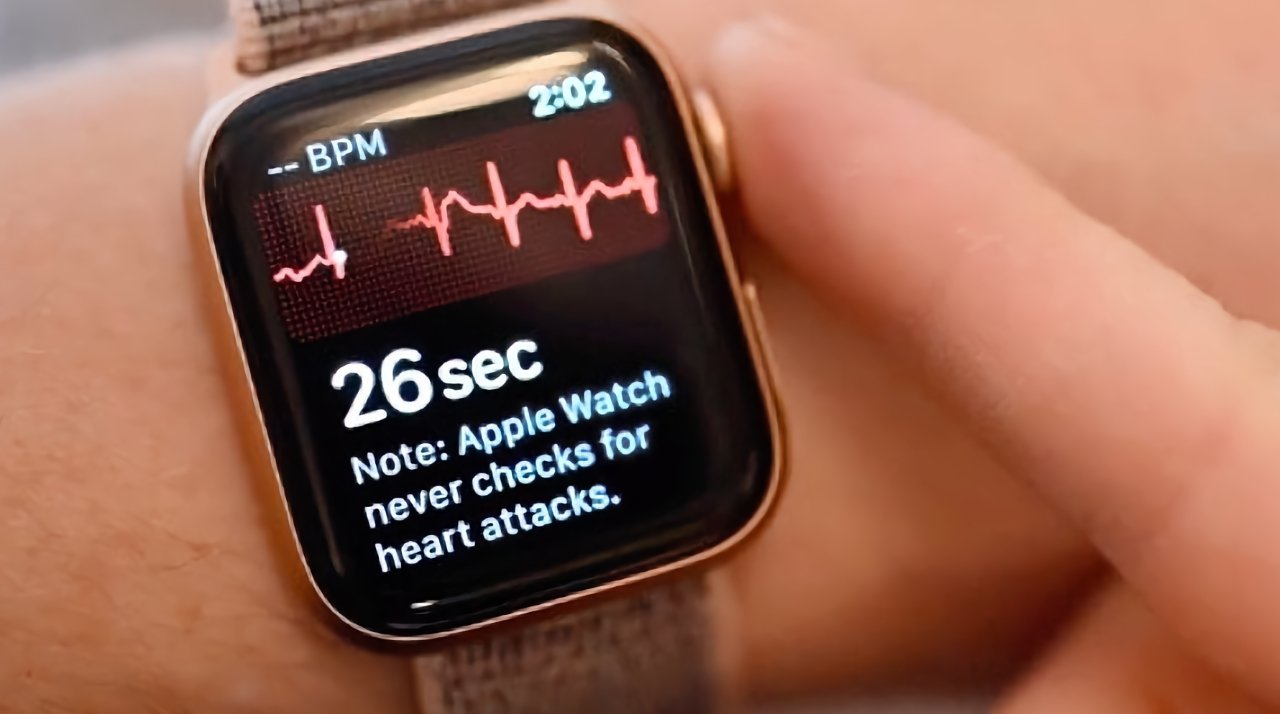
Most wearables use photoplethysmography (PPG)—optical sensors that measure pulse rate at the wrist. While pulse rate and heart rate are equivalent at rest, **HRV (electrical) and PRV (pulse rate variability) are not always equivalent** during exercise or in certain populations .
### Measurement Protocol Matters
A 2025 study evaluating the Kairos wristband against ECG found that while resting heart rate showed excellent agreement (CCC ≥ 0.99), **HRV measurements showed greater error** (wider limits of agreement and CV ≤ 13.6%) .

Key considerations for HRV tracking with wearables :
- **Sampling window matters**: Methods relying on only a few minutes of the night are unreliable. The best approach is to average data across the **entire night**.
- **5-minute resolution**: Ideally, a wearable should provide 5-minute HRV samples across the entire night (4-5 hours minimum).
- **RMSSD is preferred**: Among HRV features, **rMSSD** (root mean square of successive differences) should be favored due to standardization and clear physiological interpretation .
- **Sleep stage matters**: HRV differs significantly between sleep stages—slow wave sleep shows higher HRV than REM sleep—so the timing of measurement affects comparability .
---
## The Bottom Line
| Metric | What It Measures | What It Reflects | Clinical Meaning |
|:-------|:-----------------|:-----------------|:-----------------|
| **Heart Rate** | Frequency (beats per minute) | Average autonomic tone | Higher = more sympathetic drive |
| **Heart Rate Variability** | Fluctuation between beats (milliseconds) | Autonomic flexibility | Higher = better adaptability, lower = increased mortality risk |
**Heart rate tells you *how hard* your heart is working. Heart rate variability tells you *how well* your heart can adapt.**
They are not interchangeable, but they are inseparable. The next time you look at your wearable data, remember: a low HRV isn't just a number—it may be a signal from your autonomic nervous system that your body is struggling to adapt. And the value of that signal depends, in part, on the heart rate it accompanies.
---
*Note: This article is for educational purposes only and does not constitute medical advice. Always consult with a healthcare professional regarding your heart health and any symptoms you may experience.*