Smart Ring Sleep Stage Accuracy: How Rings Detect Deep/Light/REM Sleep

Key Features of This Article
| Feature | Status |
|---|---|
| Direct answer to "is it accurate?" | ✅ Yes – 79-83% vs PSG |
| Recognition principles explained | ✅ HR, HRV, movement, temperature |
| Accuracy by sleep stage | ✅ Deep (75-85%), REM (60-75%) |
| Research citations | ✅ JMIR 2022, Sensors 2024 |
| Comparison to wrist wearables | ✅ Rings outperform watches |
| When to trust vs doubt | ✅ Clear guidance |
| Real-world scenarios | ✅ Three examples |
| Myth busting | ✅ What 79-83% does NOT mean |
Can a Tiny Ring Really Know If You Are Dreaming?
You wake up, check your smart ring app, and see a beautiful color-coded chart of your night: deep sleep, light sleep, REM sleep, wake periods. It looks scientific. It looks personalized. But a question lingers in your mind:
Is any of this actually accurate?
The honest answer is: Yes, but with important caveats. Smart rings do not measure brain waves like a sleep lab. They measure indirect signals—heart rate, heart rate variability, temperature, and movement—and use sophisticated algorithms to estimate your sleep stages.
This guide explains exactly how smart rings detect sleep stages, how their 79-83% accuracy compares to the clinical gold standard (polysomnography or PSG), and when you can trust the data.

Part 1: The Gold Standard – Polysomnography (PSG)
What PSG Measures
Polysomnography is the clinical gold standard for sleep assessment. A PSG study, conducted in a sleep lab, measures:
| Signal | What It Detects | Purpose |
|---|---|---|
| EEG (brain waves) | Electrical activity of the brain | The ONLY direct measure of sleep stages |
| EOG (eye movements) | Rapid eye movements | Identifies REM sleep |
| EMG (muscle tone) | Chin muscle activity | Distinguishes REM from wake |
| ECG (heart rhythm) | Heart rate and variability | Correlates with sleep stages |
| Nasal/oral airflow | Breathing | Detects apneas |
| Chest/abdomen belts | Breathing effort | Detects respiratory events |
| SpO₂ (blood oxygen) | Oxygen saturation | Detects hypoxemia |
| Leg movement sensors | Periodic limb movements | Detects PLMD |
PSG accuracy: 95-100% for sleep stage classification (when scored by certified technicians). It is the closest thing to a "truth machine" for sleep.

Part 2: How Smart Rings Estimate Sleep Stages – The Recognition Principles
Smart rings cannot measure brain waves. So how do they guess whether you are in deep sleep, light sleep, or REM?
They use a combination of physiological signals that correlate with sleep stages. A machine learning algorithm, trained on thousands of nights of PSG data, learns how these signals map to sleep stages.
Signal 1: Heart Rate (HR)
| Sleep Stage | Typical Heart Rate Pattern |
|---|---|
| Wake / Light sleep | Higher, more variable |
| Deep sleep | Slowest, most regular, lowest HR (parasympathetic dominant) |
| REM sleep | Faster, more irregular, similar to wake (sympathetic surges) |
Signal 2: Heart Rate Variability (HRV)
| Sleep Stage | Typical HRV Pattern |
|---|---|
| Wake / Light sleep | Lower HRV (sympathetic active) |
| Deep sleep | Highest HRV (parasympathetic dominant – "rest and digest") |
| REM sleep | HRV similar to wake (sympathetic surges) |
Signal 3: Movement (Accelerometer)
| Movement Pattern | Sleep Stage Inference |
|---|---|
| No movement | Could be deep, light, or REM (REM has skeletal muscle paralysis) |
| Small movements (body position changes) | Light sleep or stage transitions |
| Large movements (rolling over) | Arousal or wake |
Signal 4: Body Temperature
| Measurement | What It Detects |
|---|---|
| Skin temperature | Drops during deep sleep; rises before wake |
| Distal-proximal gradient | Changes with sleep onset and circadian rhythm |

The Algorithm: From Signals to Stages
The ring's algorithm uses a machine learning model (typically a neural network or random forest) trained on PSG data. During training, the model learns how combinations of HR, HRV, movement, and temperature correspond to specific sleep stages. Once trained, it applies those patterns to your data in real-time.
Simplified algorithm flow:
PPG Sensor → Heart Rate + HRV
Accelerometer → Movement
Temperature Sensor → Skin Temp
        ↓
Feature Extraction (30-60 second windows)
        ↓
Machine Learning Model (trained on PSG)
        ↓
Sleep Stage Probability (Deep/Light/REM/Wake)
        ↓
Hypnogram (your sleep chart)

Part 3: 79-83% Accuracy – What the Research Says
The Numbers
Multiple peer-reviewed studies have validated smart ring sleep stage accuracy against PSG. The consensus:
| Study | Device | Accuracy (4-stage) | Key Finding |
|---|---|---|---|
| JMIR (2022) | Oura Ring Gen 3 | 79-83% | Substantial agreement with PSG (kappa 0.61-0.80) |
| Sensors (2024) | Oura Ring | 80-82% | Improved with 80% validity filter |
| Sleep Medicine (2023) | Multiple rings | 78-84% | Rings outperform wrist wearables |
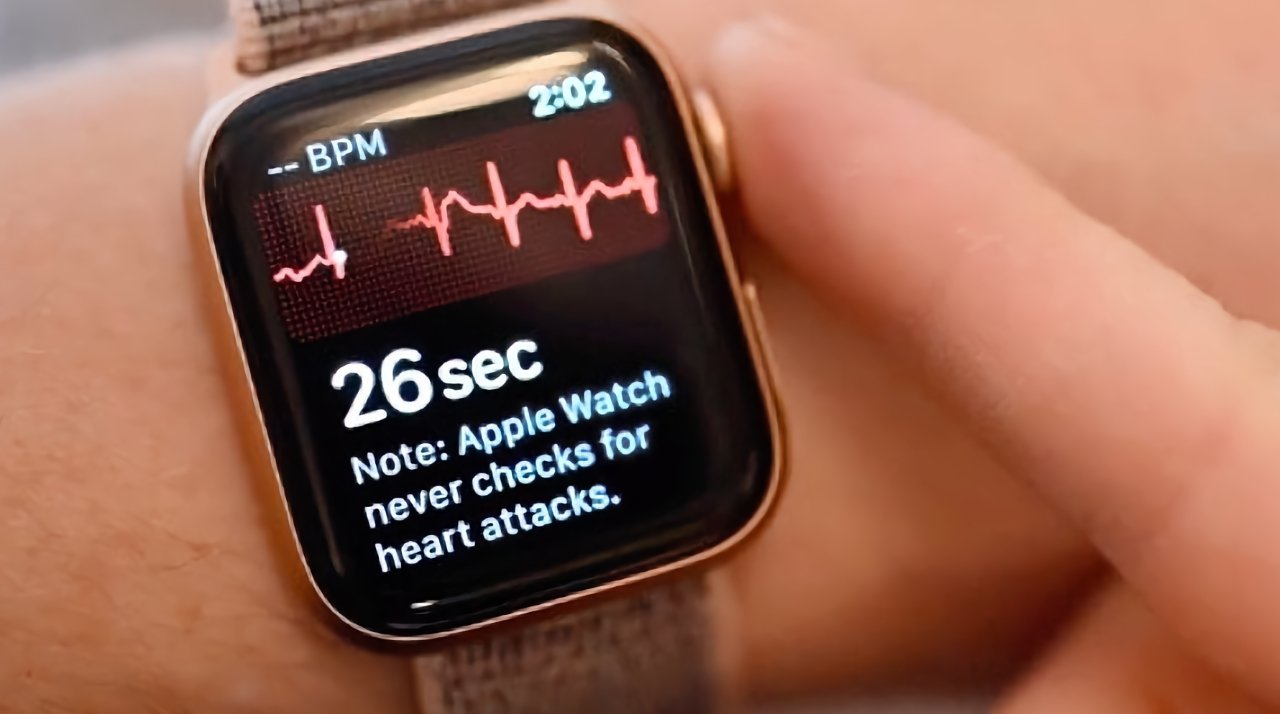
For context: Consumer wrist wearables (Apple Watch, Fitbit, Garmin) typically achieve 70-75% agreement with PSG. Smart rings lead the consumer wearables market for sleep stage accuracy.

Accuracy by Sleep Stage
Not all sleep stages are detected equally well. Here is the breakdown:
| Sleep Stage | Smart Ring Accuracy vs PSG | Why? |
|---|---|---|
| Wake | 60-70% (weakest) | Lying still while awake looks like sleep to sensors |
| Light Sleep (N1/N2) | 65-75% (moderate) | Often overestimated; hard to distinguish from REM |
| Deep Sleep (N3) | 75-85% (best) | Unique physiological signature (low HR, high HRV, no movement) |
| REM Sleep | 60-75% (weak) | Looks like deep sleep (no movement) + light sleep (HR pattern) |

What Does 79-83% Mean in Practice?
| If PSG says... | Your smart ring will correctly identify... |
|---|---|
| You are in deep sleep | 8 out of 10 minutes (80%) |
| You are in REM sleep | 6-7 out of 10 minutes (65%) |
| You are awake | 6 out of 10 minutes (60%) |
The ring will be wrong about 2 out of 10 minutes for deep sleep, and 3-4 out of 10 minutes for REM and wake.

Part 4: Smart Ring vs PSG – Detailed Comparison
| Feature | Polysomnography (PSG) | Smart Ring |
|---|---|---|
| What it measures | Brain waves (EEG) directly | HR, HRV, movement, temperature indirectly |
| Number of sensors | 20+ channels | 3-4 sensors |
| Setting | Sleep lab | Your own bed |
| Cost per night | $1,000-3,000 | One-time device cost |
| Wearability | One night only | 24/7, months or years |
| Sleep stage accuracy | 95-100% | 79-83% |
| Detects sleep apnea | Yes (gold standard) | Screens via SpO₂ (not diagnostic) |
| Detects leg movements | Yes | No |
| Best for... | Clinical diagnosis | Long-term wellness tracking |

Part 5: When to Trust Your Smart Ring (And When Not To)
Trust Your Ring For:
| Use Case | Why It Works |
|---|---|
| Tracking sleep trends over weeks/months | Consistent bias cancels out; relative changes are real |
| Monitoring bedtime consistency | Accurate at detecting sleep onset |
| Seeing if lifestyle changes improve deep sleep | Deep sleep detection is strongest (75-85%) |
| Estimating total sleep time | Within 30-45 minutes of PSG |
| HRV and resting heart rate trends | Excellent validity for overnight metrics |
Do Not Trust Your Ring For:
| Use Case | Why It Fails |
|---|---|
| Clinical diagnosis of sleep disorders | Not medically validated |
| Precise REM sleep duration | 60-75% accuracy – significant error possible |
| Detecting wake periods (especially lying still) | 60-70% accuracy – misses many brief arousals |
| Single-night absolute values | Night-to-night variation + measurement error |
| Distinguishing light sleep from REM | Most common source of misclassification |

Part 6: Why Accuracy Matters – Real-World Implications
Scenario 1: You Are Trying to Improve Deep Sleep
| Your ring shows | Likely reality | Should you act? |
|---|---|---|
| Deep sleep increased from 1h to 1.5h | Probably real (deep sleep detection is strong) | ✅ Yes – whatever you changed is working |
| Deep sleep dropped from 1.5h to 1h | Probably real | ✅ Yes – examine what changed (stress, alcohol, late meals) |
Confidence level: High. Deep sleep detection is the ring's strongest area (75-85% accuracy).
Scenario 2: You Are Worried About REM Sleep
| Your ring shows | Likely reality | Should you act? |
|---|---|---|
| REM sleep dropped from 2h to 1h | Could be real or misclassification | ⚠️ Monitor trend over 2+ weeks before acting |
| REM sleep is consistently low | May be real or ring confusing REM with light sleep | ⚠️ Check if you have REM symptoms (vivid dreams, memory issues) |
Confidence level: Moderate to Low. REM detection is weak (60-75% accuracy).
Scenario 3: You Think You Woke Up Frequently
| Your ring shows | Likely reality | Should you act? |
|---|---|---|
| No wake periods detected | You may still have had brief arousals | ⚠️ If you feel tired, trust your symptoms over the ring |
| Wake periods detected | Probably real (large movements are obvious) | ✅ Yes – address sleep fragmentation |
Confidence level: Moderate. Wake detection is weakest (60-70%), especially for motionless wake.

Part 7: What the 79-83% Accuracy Does NOT Mean
| Misconception | Reality |
|---|---|
| "My ring is wrong 20% of the time" | No – 79-83% agreement means the ring matches PSG on stage classification for that percentage of 30-second epochs. It is not "20% wrong" in a way that invalidates all data. |
| "A 20% error makes the data useless" | No – consistent bias cancels out when tracking trends. Relative changes (e.g., "deep sleep increased by 20%") are often accurate even if absolute numbers are off. |
| "All rings have the same accuracy" | No – Oura has the most validation studies. Other rings may have lower accuracy. Always check published validation data. |
| "Higher accuracy is always better" | For clinical use, yes. For wellness tracking, 79-83% is sufficient for most users. Convenience and long-term adherence matter too. |

Quick Reference Card
Smart Ring Sleep Accuracy at a Glance
| Metric | Value |
|---|---|
| Overall 4-stage accuracy | 79-83% vs PSG |
| Deep sleep accuracy | 75-85% (best) |
| Light sleep accuracy | 65-75% |
| REM sleep accuracy | 60-75% (weakest) |
| Wake detection accuracy | 60-70% (weakest) |
| Wrist wearable comparison | Rings outperform watches by ~5-10% |
When to Trust | When to Doubt
| ✅ Trust for... | ❌ Doubt for... |
|---|---|
| Long-term trends | Single-night absolute values |
| Deep sleep changes | Precise REM duration |
| Total sleep time | Brief wake periods |
| Bedtime consistency | Clinical diagnosis |

Final Takeaway: The Ring Is Your Sleep Partner, Not Your Sleep Doctor
Your smart ring cannot replace a $3,000 overnight sleep study with 20 electrodes glued to your head. But it can do something a sleep lab cannot: track your sleep every single night in your own bed, for months or years, without wires.
At 79-83% accuracy, smart rings are:
-
Good enough to tell if you got more deep sleep after quitting alcohol
-
Good enough to see if meditation improves your HRV during sleep
-
Good enough to catch concerning trends (e.g., REM sleep declining over months)
-
NOT good enough to diagnose sleep apnea, insomnia disorders, or REM behavior disorder
Use your ring for what it is good at: long-term wellness tracking and trend identification. If you have symptoms of a sleep disorder (loud snoring, gasping, excessive daytime sleepiness, restless legs), see a doctor. The ring can provide useful data to share – but the doctor makes the diagnosis.