Stress Monitoring Wearables Compared: Who's Really Helping You Manage Recovery Load?

## 30-Second Summary
- **Stress is not a single metric**—it's a complex physiological and psychological state that requires context from sleep, training, and emotional state to interpret meaningfully .
- **HRV is the foundation of most stress scores**, but different devices use different algorithms, windows, and weightings—making direct comparisons unreliable .
- **Oura leads in stress tracking** with three interconnected features (Daytime Stress, Resilience, Cumulative Stress) and the most transparent interpretation .
- **Garmin's approach is training-focused**, viewing stress through the prism of exercise recovery and Body Battery, with the Forerunner 165 offering the best balance at $199 .
- **PPG accuracy varies by device**—Garmin Forerunner 55s achieved AUROC up to 0.961 in lab stress detection, comparable to research-grade devices .
---
## Introduction: Stress Monitoring Comes of Age
Stress is an oft-misunderstood concept. There's no definitive metric for it, and each wearable brand presents it differently. But after years as an afterthought, accurate stress-tracking wearables with useful features and actionable insights are finally here .
The challenge? **Stress doesn't exist in a vacuum.** Your physiological stress response is shaped by sleep quality, training load, nutrition, emotional state, and even hydration . A stress score without context is like a map without landmarks—it shows you something, but you can't tell where you are.
This guide compares the leading stress-tracking wearables and, more importantly, explains how to interpret their data in the context of your full recovery picture.

---
## How Wearables Measure Stress: The Science
Most consumer wearables derive stress scores primarily from **heart rate variability (HRV)** . Here's why:
- **Higher HRV** is associated with parasympathetic (rest and digest) activation—a state of relaxation
- **Lower HRV** is linked to sympathetic (fight or flight) dominance during stress, challenges, or exercise
When you're stressed, your sympathetic nervous system activates, releasing noradrenaline and initiating the "fight or flight" response. This suppresses vagal (parasympathetic) activity, which is reflected in reduced HRV metrics like RMSSD and HF power .
A 2025 study published in *Stress and Health* confirmed that HRV significantly differs between stress and rest conditions—and that Garmin's stress score, mean HR, and HF power all showed significant differences during mental stress tasks .

### The Accuracy Question
A 2025 study extending stress detection reproducibility to consumer wearables found that Garmin Forerunner 55s achieved **AUROC up to 0.961** in detecting mental arithmetic stress—comparable to research-grade devices like Polar H10 (AUROC 0.954) and Empatica E4 (AUROC 0.953) . Combining HRV with electrodermal activity (EDA) enhanced stress prediction across most scenarios .
However, the study also found that performance varied across devices and models, and **proprietary algorithms and limited transparency remain challenges** .

---
## Head-to-Head: Leading Stress Trackers
### 1. Oura Ring: Best Overall for Stress
Oura has three core, interconnected stress-tracking features: **Daytime Stress, Resilience, and the new Cumulative Stress**. In tandem, these features make it our top recommendation .
| Feature | What It Tracks | Timeframe | Best For |
|:--------|:---------------|:----------|:---------|
| **Daytime Stress** | HRV, motion, body temperature minute-by-minute | Real-time, daily | Identifying acute triggers |
| **Resilience** | Balance between daily stress and overnight recovery | 14-day trend | Long-term recovery patterns |
| **Cumulative Stress** | Five contributors including heart stress response and sleep continuity | 31-day view | Chronic stress patterns |
> "Nobody explains what it's tracking better than Oura, and that deep-dive interpretation keeps it well ahead of the chasing pack as the best overall stress tracker." — Wareable
The October 2025 app revamp consolidated all features into a unified Stress Management dashboard, adding contextual interpretations like: *"Holding your ground; your cumulative stress is low, even if resilience is dipping slightly. That's not a concern at this stage, just something to be aware of"* .

### 2. WHOOP: Real-Time Stress Monitoring
WHOOP's stress experience centers around a **Stress Monitor score (0–3)** that calculates real-time HRV and heart rate against personal baselines .
| Score Range | Interpretation |
|:------------|:---------------|
| 0–1 | Low stress |
| 1–2 | Medium stress |
| 2–3 | High stress |
WHOOP takes workouts out of the stress calculation to differentiate body stress from physical activity. The score is updated 24/7, and comparisons with the same day of the week can help identify patterns .
**Important**: Stress insights are now only available with Peak or Life memberships—not with the WHOOP One tier .

### 3. Garmin: Training-Focused Stress Insights
Garmin approaches stress primarily through the lens of training and conditioning. Its 24/7 stress tracking breaks stress into rest, low, medium, or high zones, summarized in a 0–100 daily figure .
**Key features**:
- **Body Battery**: Combines stress, recovery, and activity to estimate energy reserves
- **HRV Status**: Medium-term assessment of recovery balance
- **Training Readiness**: Uses stress history as part of the readiness score
- **Recovery Hours**: May be adjusted based on stress levels
The **Garmin Forerunner 165** ($199) packs Body Battery, 24/7 stress scoring, HRV Status, and Recovery Time into a lightweight, AMOLED-equipped package—making it the most accessible entry point without a subscription .

### 4. Google/Fitbit: Holistic with EDA
Fitbit's most advanced stress feature is **Body Responses**, which uses cEDA (continuous electrodermal activity sensor) on devices like the Pixel Watch to detect electrical changes in the skin during sweat secretion .
When a spike is detected, the device alerts you and asks you to log your feelings—helping you understand what might trigger body stress. However, testing has found this system "hit-and-miss," sometimes popping up 10 minutes after an event, requiring active logging that many find inconvenient .
All Fitbit devices access a **Stress Management Score (0–100)** derived from heart rate and sleep data, though testing found this score remained similar even with significant changes to routines .

### 5. Emerging: Screenless Alternatives
The screenless tracker market is growing, with new entrants offering stress tracking without subscriptions:
- **Speediance Strap** (CES 2026 prototype): Screen-free tracker with CARE-based system (Collect, Analyse, Recommend, Execute) providing daily readiness, training intensity, and recovery feedback—without a mandatory subscription
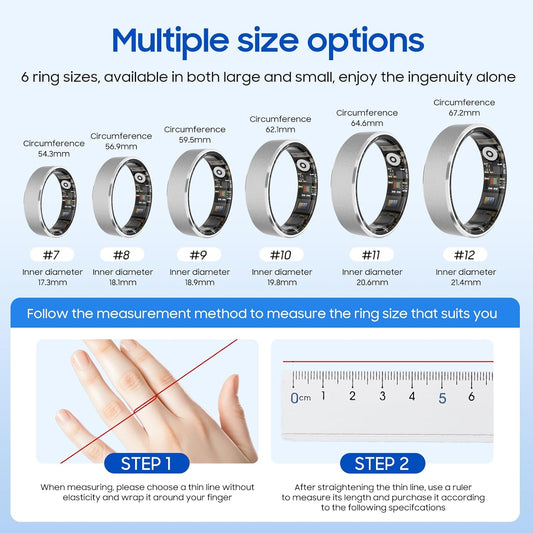
- **Reebok Smart Ring** ($249): Includes stress level features alongside heart rate, sleep, activity, and recovery stats—bundles into a "One Score" health snapshot

---
## What the Research Says: Interpreting Stress Scores
### Composite Health Scores: Useful but Limited
A 2025 evaluation of 14 Composite Health Scores (CHS) from 10 major wearable manufacturers found that HRV (86%) and resting heart rate (79%) were the most frequently incorporated biometric contributors . However:
- **None of the manufacturers disclosed their exact algorithmic formulas**
- **Few provided empirical validation** of their scores
- **Significant discrepancies exist in data collection timeframes and metric weighting**
> "CHS have become a prominent feature in several consumer wearables... However, it is unclear whether these indices have undergone rigorous validation in diverse populations or under varying physiological conditions, raising concerns about their generalisability and reliability."
### Stress Scores vs. Subjective Experience
A 2025 study published in *Stress and Health* found that while Garmin's stress score correlated significantly with HR, RMSSD, and SD2/SD1, **heart rate showed the strongest association with self-reported stress**—and the Garmin stress score demonstrated only marginal predictive value for subjective stress experience .
This highlights that **wearable stress scores are physiological proxies, not direct measures of your felt experience**.

---
## How to Use Stress Data Intelligently
### 1. Establish Your Personal Baseline
HRV and stress scores vary significantly by age, sex, and fitness level. **Compare against your own trends, not population averages** .
### 2. Context Matters
A high stress score after a hard workout is expected—your sympathetic system is activated. A high stress score after poor sleep or a skipped recovery day is a signal to adjust. Track stress alongside:
- **Sleep quality and duration**
- **Training load** (intensity, volume)
- **Subjective mood** (energy, motivation, irritability)
- **Nutrition and hydration**
### 3. Watch for Patterns, Not Spikes
Oura's Resilience feature, which analyzes balance between daily stress and overnight recovery over 14 days, is more useful for long-term health than minute-by-minute stress scores .
### 4. Use the Data to Inform, Not Dictate
"Ayahuasca descends from the storm’s drama." Stress scores are tools for awareness—not verdicts. Use them to ask better questions about your recovery, not to label yourself as "stressed."

---
## Summary Table: Best Stress Trackers Compared
| Device | Best Feature | Key Stress Metrics | Subscription? | Price |
|:-------|:-------------|:-------------------|:--------------|:------|
| **Oura Ring** | Most comprehensive interpretation | Daytime Stress, Resilience, Cumulative Stress | Optional | $$$$ |
| **WHOOP** | 24/7 real-time scoring | Stress Monitor (0–3) | Required | $$ (hardware) + Membership |
| **Garmin Forerunner 165** | Best training-focused balance | Body Battery, HRV Status, Stress Score | No | $$ ($199) |
| **Google Pixel Watch** | EDA sensor for body responses | Body Responses, Stress Management Score | No | $$$ |
| **Speediance Strap** | Screen-free, no mandatory subscription | Daily readiness, stress, recovery | Optional tier | TBD |
| **BKC × ZekNeo** | Affordable, screen-free tracking | Overnight HRV, stress trends | No | $ (Under $50) |
---
## Final Thoughts
Stress monitoring wearables have matured significantly. The best devices—like Oura, WHOOP, and Garmin—offer useful insights into your physiological stress responses. However, **no wearable replaces self-awareness**. The data is most valuable when paired with context: your sleep, training, emotions, and life circumstances.
As the research shows, stress scores are physiological proxies, not definitive diagnoses . Use them as a starting point for reflection, not a final verdict on your well-being.
---
*Note: This article is for educational purposes only and does not constitute medical advice. Always consult with a healthcare professional regarding your health concerns. The BKC × ZekNeo Smart Bracelet is designed for daily wellness tracking and trends, not professional-level medical precision.*