24/7 Heart Rate Tracking Showdown: Screenless Bands vs. Smartwatches

## 30-Second Summary
- **Smartwatches excel at active workout tracking** with built-in GPS and real-time heart rate zones, but their bulk and screen notifications can disrupt sleep and passive monitoring.
- **Screenless bands prioritize 24/7 wearability**—they're lighter, more comfortable for sleep, and designed to fade into the background so you can forget you're wearing them.
- **Accuracy trade-offs exist**: during high-intensity exercise or rapid heart rate changes, wrist-based wearables—both smartwatches and bands—show performance declines compared to chest straps .
- **The emerging trend is multi-device ecosystems**: Google now positions the screenless Fitbit Air as a companion to its Pixel Watch—use the smartwatch by day, the band by night .
- **Your choice depends on priorities**: if continuous, uninterrupted data across sleep and recovery matters most, screenless bands have a clear advantage for passive tracking.
---
## The Two Worlds of Heart Rate Monitoring
Walk into any gym or glance around a coffee shop, and you'll see them: glowing screens on wrists, tracking steps, heart rate, and notifications. But there's a quieter revolution happening in wearable tech—one that's ditching the screen entirely.
The question isn't which device tracks heart rate better. It's **which device tracks your heart rate more consistently, across more of your life, without getting in the way.**

| Feature | Screenless Bands | Smartwatches |
|:--------|:-----------------|:-------------|
| **All-day comfort** | Excellent—ultra-light, minimal profile | Moderate—bulkier, often removed for sleep |
| **Sleep tracking** | Superior—designed for overnight wear | Acceptable but often uncomfortable |
| **Workout tracking** | Basic—steps, heart rate trends | Advanced—GPS, pace, VO2 Max, zones |
| **Real-time feedback** | None—data lives in the app | Full—screens show live metrics |
| **Notifications** | Minimal or none | Constant—can be distracting |
| **Battery life** | 7–30 days | 1–7 days |
| **Accuracy during exercise** | Moderate—declines in high-intensity | Moderate—wrist-based limitations apply |
| **Accuracy during rest** | High—stable conditions | High—comparable to bands |
---
## The Case for Screenless: Why "Invisible" Tech Wins for Continuous Tracking
Smartwatches are incredible tools, but they are demanding. "They buzz during meetings, light up in movie theaters, and need to be charged almost as often as your phone. For many of us, the friction of wearing a computer on our wrist is starting to outweigh the benefit of closing digital rings" .
This has paved the way for a new category of "ambient" health tech. These devices trade screens for sensors, prioritizing comfort and continuous data over notifications and apps. They are designed to be worn 24/7—even in the shower or to bed—without you noticing them .
### Sleep: Where Screenless Devices Shine
Here's the critical insight: **sleep tracking data is only as good as your willingness to wear the device to bed.**
Google's new Fitbit Air—a screenless tracker priced at $99—was "purpose-built with sleep in mind, sporting a screenless design that's meant to be easy to forget once on the wrist" . It supports silent alarms and smart wake features, making it a more natural overnight option than a full smartwatch.

Even Garmin—known for its rugged smartwatches—has acknowledged the problem. The company launched the Index Sleep Monitor, a screenless armband designed specifically for users who find their bulky Fenix or Forerunner watches "too cumbersome to wear at night" . In testing, the Index Sleep Monitor produced superior sleep data compared to Garmin watches, with more consistent sleep staging and recovery metrics .
### Battery Life: The Unseen Advantage
A smartwatch that needs charging every 1-2 days inevitably creates gaps in your data. Screenless bands can last anywhere from 7 to 30 days on a single charge .
The BKC × ZekNeo Smart Bracelet, for example, offers **30 days of battery life**—meaning you can track continuously for a full month without interruption. This matters because health trends require consistent data; gaps from charging create blind spots in your recovery picture.
### The Accuracy Question: What the Science Says
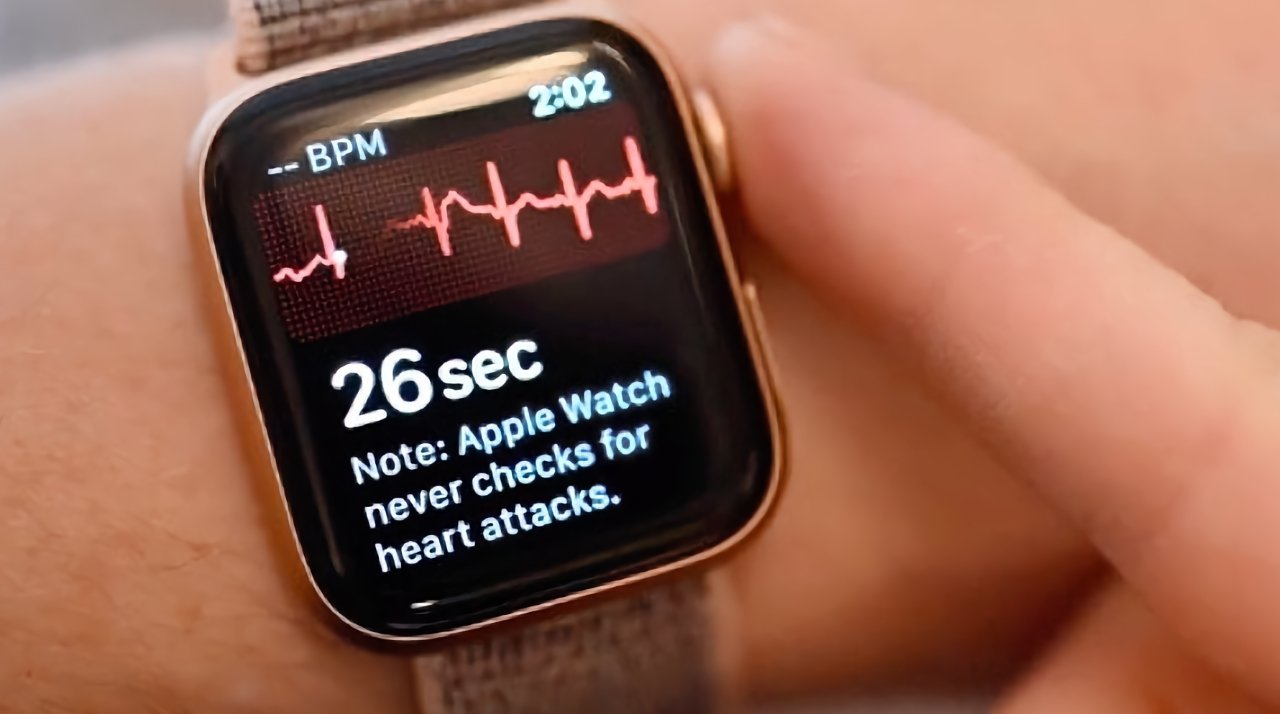
Both smartwatches and screenless bands use the same underlying technology: **photoplethysmography (PPG)**—optical sensors that detect blood volume changes beneath the skin.
A 2025 validation study published in *Sensors* compared multiple wrist-worn wearables against a 12-lead ECG. The findings were instructive: "**Performance notably declined across all wrist-worn devices during transient states, with motion onset and large step changes in heart rate exacerbating measurement errors**" . In plain English: **all wrist-based devices struggle during rapid heart rate changes**.
However, the same study found that "wrist-worn wearable devices may be better suited for **average and trend heart rate monitoring** rather than capturing acute dynamics" . This is precisely what screenless bands are optimized for—continuous trends, not real-time spikes.

A separate study confirmed that **upper arm placement significantly outperforms wrist placement** for accuracy—the Polar Verity Sense worn on the upper arm achieved a mean absolute error of just 1.43 bpm compared to ECG . This suggests that form factor matters: devices worn higher on the arm may offer better data than those on the wrist.
---
## Head-to-Head: Where Each Device Wins
| Scenario | Best Device | Why |
|:---------|:------------|:----|
| **Sleep tracking** | Screenless band | More comfortable to wear; less likely to be removed |
| **High-intensity training** | Chest strap or upper-arm band | Wrist-based accuracy drops during movement |
| **Running with GPS** | Smartwatch | Built-in GPS tracks pace, distance, routes |
| **Daily resting HR trends** | Either | Both perform well in steady-state conditions |
| **Overnight recovery analysis** | Screenless band | No screen disruptions; superior sleep staging |
| **Workout notifications** | Smartwatch | Screen allows real-time feedback |
| **Long-term continuous data** | Screenless band | Longer battery life means fewer gaps |
---
## The Emerging Ecosystem Strategy
Google's approach with the Fitbit Air reveals the future: **you don't have to choose one**. "Use the Pixel Watch 4 during the day, then swap to the Fitbit Air at night while the watch is on charge. In that setup, the Air becomes the more comfortable, less obtrusive option for sleep tracking, while the Watch 4 keeps its place as the more fully featured daytime device" .

Both devices feed data into the same app ecosystem, meaning no gaps in your health picture. "If the Air and Pixel Watch 4 are both feeding into the same place, data duplication becomes a non-issue, and the decision simply comes down to convenience" .
This two-device model makes a compelling case for screenless bands: they aren't replacements for smartwatches, but **essential companions for the hours when a smartwatch doesn't make sense—especially overnight**.
---
## Which Should You Choose?
### Choose a screenless band if:
- Your priority is **continuous, uninterrupted data across sleep and recovery**
- You find smartwatches **uncomfortable to wear at night**
- You want **long battery life and minimal charging hassle**
- You prefer **passive tracking without notifications or screen distractions**
- You're building a **multi-device ecosystem** where the band complements a smartwatch
### Choose a smartwatch if:
- You need **real-time feedback during workouts** (pace, GPS, heart rate zones)
- You value **on-wrist notifications and smart features**
- You primarily track **active exercise sessions** rather than passive recovery
- You want a **single device** that does everything (even if it means compromises for sleep)
---
## Final Thoughts
The best heart rate monitor for 24/7 tracking isn't the one with the most features—it's the one you'll actually wear consistently. Screenless bands win on **comfort, battery life, and sleep compatibility**, while smartwatches win on **real-time workout data and smart features**.
As the research shows, both share the same fundamental limitation during rapid heart rate changes . But for the 16+ hours a day you're at rest, asleep, or moving moderately, screenless bands offer a **distraction-free, continuous window into your recovery and cardiovascular health**.
The [**BKC × ZekNeo Smart Bracelet**]embodies this screenless philosophy—14 grams, 30-day battery, and 24/7 tracking of heart rate, HRV, sleep stages, and blood oxygen, all without a subscription. It's designed to be forgotten, so your data can speak for itself.

---
*Note: This article is for educational purposes only and does not constitute medical advice. Always consult with a healthcare professional regarding your heart health and any symptoms you may experience.*