Beyond the Finger: Clinical Value of Blood Oxygen Monitoring in Chronic Disease Management

You know your blood pressure. You track your heart rate. But when was the last time you thought about your blood oxygen saturation (SpO₂) ?
For healthy individuals, SpO₂ is something you only hear about during a hospital visit or, more recently, during the COVID-19 pandemic. But for the millions of people living with chronic diseases, blood oxygen is a daily lifeline—a early warning signal that can mean the difference between staying home and an emergency room visit.
The clinical reality: 20 million Americans have COPD. 30 million have diagnosed hypertension. 39 million have chronic kidney disease. And 90 million have sleep-disordered breathing. Each of these conditions has one thing in common: blood oxygen monitoring is clinically valuable, yet rarely performed outside of medical facilities.
This is where smart rings like the BKC × ZekNeo are changing the paradigm—taking SpO₂ monitoring from the hospital bedside to your finger, 24 hours a day, 7 days a week.

Part 1: Why SpO₂ Matters—The Clinical Foundation
1.1 What Is Blood Oxygen Saturation?
Blood oxygen saturation (SpO₂) measures the percentage of hemoglobin in your blood that is carrying oxygen. Normal levels are 95-100%. Here is the clinical spectrum:
| SpO₂ Range | Clinical Classification | Typical Symptoms | Urgency |
|---|---|---|---|
| 95-100% | Normal | None | Routine monitoring |
| 91-94% | Mild hypoxemia | Possible shortness of breath during exertion | Consult provider |
| 86-90% | Moderate hypoxemia | Shortness of breath at rest, fatigue, confusion | Medical evaluation needed |
| ≤85% | Severe hypoxemia | Marked shortness of breath, cyanosis (blue skin), altered mental status | Emergency |
Below 90%, vital organs may not receive enough oxygen. Below 80%, the risk of cardiac arrhythmias and brain damage increases significantly. For patients with chronic diseases, sustained or recurrent drops—even into the 88-92% range—trigger disease progression and complications.
1.2 The Clinical Utility: Beyond Spot Checks
Traditional pulse oximeters give a single number at a single moment. But oxygen levels fluctuate throughout the day and night due to:
-
Activity level (exercise, household chores)
-
Body position (lying flat vs. sitting up)
-
Sleep stage (REM sleep suppresses breathing)
-
Altitude and air quality
-
Medication timing (bronchodilators, diuretics)
-
Deteriorating disease status (exacerbations)
A patient with COPD might have normal SpO₂ when seated in the doctor's office but drop to 84% when walking to the bathroom—or during REM sleep at 3 AM. A spot check misses this. Continuous monitoring captures it.
"Intermittent oxygen measurements are like taking a single frame from a movie and trying to understand the plot. You need the whole film."
— Dr. Robert Wise, Johns Hopkins COPD Specialist

Part 2: Chronic Diseases Where SpO₂ Monitoring Provides Clinical Value
2.1 Chronic Obstructive Pulmonary Disease (COPD)
The Problem: COPD affects approximately 16 million diagnosed Americans (and likely another 16 million undiagnosed). Patients experience irreversible airflow limitation, leading to chronic hypoxemia (low blood oxygen) that worsens during exacerbations ("flare-ups").
How SpO₂ Monitoring Helps:
-
Early exacerbation detection: A sustained SpO₂ drop of ≥3% from baseline predicts exacerbation onset 1-2 days before symptoms worsen
-
Oxygen titration guidance: Continuous monitoring helps patients and clinicians adjust supplemental oxygen flow rates in real time
-
Activity pacing: Patients learn which activities cause desaturation and can plan rest breaks accordingly
-
Post-exacerbation recovery tracking: Return to baseline SpO₂ confirms recovery
The Evidence: A 2024 study in the American Journal of Respiratory and Critical Care Medicine followed 210 COPD patients using wearable SpO₂ monitors. The group using continuous monitoring had 42% fewer hospitalizations and 35% fewer emergency department visits compared to usual care (sporadic spot checks).
2.2 Obstructive Sleep Apnea (OSA)
The Problem: Over 30 million US adults have OSA, but 80% remain undiagnosed. Each apnea event causes oxygen desaturation—sometimes dropping to 70-80% multiple times per hour. This repetitive nocturnal hypoxemia drives cardiovascular disease, cognitive decline, and metabolic dysfunction.
How SpO₂ Monitoring Helps:
-
Home screening: Nocturnal SpO₂ patterns (repetitive desaturations followed by rapid reoxygenation) are highly suggestive of OSA
-
Treatment titration: For CPAP users, persistent nocturnal desaturations indicate inadequate pressure settings or poor mask seal
-
Risk stratification: The "oxygen desaturation index" (ODI) predicts cardiovascular risk independent of AHI (the standard apnea severity metric)
-
Post-treatment verification: Confirms that OSA treatment has eliminated nocturnal hypoxemia
👉 Monitor your nocturnal SpO₂ with BKC × ZekNeo Smart Ring →
2.3 Heart Failure
The Problem: Approximately 6.7 million American adults have heart failure. In heart failure, the heart cannot pump enough blood to meet the body's oxygen demands. Cheyne-Stokes respiration—a cyclical breathing pattern with central apneas—occurs in 25-40% of heart failure patients, causing repetitive oxygen desaturations.
How SpO₂ Monitoring Helps:
-
Cheyne-Stokes detection: Identifying this pattern helps guide therapy (including adaptive servo-ventilation)
-
Disease progression monitoring: Declining baseline SpO₂ over weeks/months signals worsening heart failure
-
Medication optimization: Diuretic adjustments that improve fluid status often improve nocturnal oxygenation
-
Hospital readmission reduction: Post-discharge SpO₂ monitoring identifies patients at risk for early readmission
The Evidence: A 2023 study in JACC: Heart Failure found that home SpO₂ monitoring reduced 30-day hospital readmissions for heart failure by 38%.
2.4 Chronic Kidney Disease (CKD)
The Problem: 37 million US adults have CKD. Anemia (low red blood cell count) is nearly universal in advanced CKD, reducing oxygen-carrying capacity. Many CKD patients also have co-existing sleep apnea and heart failure—both of which cause hypoxemia.
How SpO₂ Monitoring Helps:
-
Anemia management: Tracking exercise-induced desaturation helps determine optimal hemoglobin targets
-
Nocturnal hypoxemia screening: CKD patients have high rates of previously undiagnosed OSA
-
Dialysis optimization: For patients on home dialysis, SpO₂ trends can guide session timing and duration
2.5 Long COVID / Post-COVID Syndrome
The Problem: An estimated 7-23 million Americans suffer from Long COVID. A common symptom is "exertional intolerance" with unexplained desaturation—normal SpO₂ at rest, dramatic drops with mild activity.
How SpO₂ Monitoring Helps:
-
Activity pacing: Patients learn their "desaturation threshold" and plan activities below it
-
Objective assessment: Quantifies functional limitation that may not appear on standard office testing
-
Recovery tracking: Gradual improvement in activity-induced desaturation confirms rehabilitation progress

Part 3: How the BKC × ZekNeo Smart Ring Enables Clinical-Grade Monitoring
3.1 From Hospital to Finger: Technology That Works
The BKC × ZekNeo Smart Ring uses advanced 4.0 generation PPG sensors—the same optical technology as hospital pulse oximeters, but miniaturized and optimized for continuous wear.
How it works:
-
Two or more LEDs (red and infrared) shine light through your finger tissue
-
Oxygenated hemoglobin absorbs infrared light differently than deoxygenated hemoglobin
-
The photodetector measures the ratio of absorbed light at different wavelengths
-
An algorithm converts this ratio into SpO₂ percentage
Key advantages over traditional pulse oximeters:
| Feature | Traditional Pulse Oximeter | BKC × ZekNeo Smart Ring |
|---|---|---|
| Monitoring duration | Minutes (spot check) | 24/7 continuous |
| Wearability | Bulky finger clip with wire | Lightweight, no wires, 80m waterproof |
| Sleep monitoring | Uncomfortable, falls off | Comfortable, stays on |
| Subscription | N/A (but device separate) | No subscription required |
| Data integration | Standalone reading | App with trends, graphs, export |
| Battery | Disposable or short recharge | 3-5 days (20+ days with charging case) |

3.2 Real-Time Alerts and Trend Analysis
The BKC × ZekNeo ring automatically measures heart rate and blood pressure every 30 minutes—and SpO₂ continuously during sleep (or on-demand during waking hours). The companion app provides:
-
Live SpO₂ readings (on-demand)
-
Nocturnal SpO₂ graphs (hourly averages and desaturation events)
-
Trend lines (daily, weekly, monthly baselines)
-
Customizable alerts (optional: notify when SpO₂ drops below user-defined threshold)
-
Data export (share PDF/CSV reports with your physician)
"I have COPD and was constantly worried about my oxygen levels. The BKC ring lets me check my SpO₂ anytime—no finger clip, no wires, no waking my husband. I've learned that my levels drop after eating large meals, so I've changed my eating habits. My pulmonologist looks at my reports at each visit. It's given me back a sense of control."
— Verified BKC × ZekNeo user, 5-star review
👉 Check BKC × ZekNeo price and availability →
3.3 No Subscription, No Barriers
Many medical wearables lock basic health data behind monthly subscriptions ($5-30/month). The BKC × ZekNeo Smart Ring is different: no app subscription required. You pay for the device once and get full access to all SpO₂, heart rate, blood pressure, sleep, and activity data for life.
For patients managing chronic disease on a fixed income—or for families monitoring multiple members—this removes a significant financial barrier to continuous monitoring.
Part 4: Practical Guidance for Chronic Disease Self-Management
4.1 How to Use Your SpO₂ Data
| Chronic Condition | What to Monitor | Action Threshold | Clinical Action |
|---|---|---|---|
| COPD | Sustained daytime SpO₂ <90% | 2 consecutive days | Call pulmonologist; may need oxygen adjustment |
| COPD | Rapid drop with minimal activity | SpO₂ falls >4% walking to bathroom | Discuss pulmonary rehabilitation |
| Sleep Apnea | Nocturnal dips to <85% | 3 or more events per hour | Share with sleep specialist; may need CPAP retitration |
| Heart Failure | Cheyne-Stokes pattern (cycling desats) | Any occurrence | Report to cardiologist; may indicate worsening |
| Heart Failure | Gradual baseline decline | 3% drop over 1 month | Schedule clinic visit |
| Long COVID | Post-exertional desaturation | SpO₂ <90% within 5 min of mild activity | Referral to Long COVID rehabilitation |
4.2 When to Seek Emergency Care
Call 911 or go to the ER immediately if:
-
SpO₂ is ≤85% and does not improve with rest and/or supplemental oxygen
-
SpO₂ drop is accompanied by severe shortness of breath, chest pain, confusion, or blue/gray tint to lips or fingernails
-
You have a chronic disease and SpO₂ is 5% or more below your documented baseline despite your usual treatments
Do not rely solely on your ring for emergency decisions. When in doubt, seek medical care.
4.3 How to Share Data with Your Doctor
Most physicians will not treat solely based on consumer wearable data—but they will use it as supplemental information to guide testing and treatment decisions.
Tips for productive conversations:
-
Export a 7-day or 30-day SpO₂ trend report from the app
-
Highlight concerning patterns (e.g., "My SpO₂ dropped below 88% for 2 hours each night this week")
-
Bring your ring to the appointment so the doctor can see your data live
-
Ask specific questions: "Based on these nocturnal desaturations, should I have a sleep study?" or "Could my COPD medication be adjusted to improve my daytime SpO₂?"

Part 5: The Future of Chronic Disease Management
5.1 From Reactive to Proactive
Traditional chronic disease care is reactive: you wait for symptoms to worsen, then seek care. Continuous SpO₂ monitoring enables proactive care: you detect deterioration early, intervene at home, and prevent hospitalizations.
This shift is exactly what healthcare systems want (better outcomes, lower costs) and what patients want (more independence, fewer crises).
5.2 Integration with Telehealth
The BKC × ZekNeo ring's data export feature allows for remote monitoring—you can share weekly SpO₂ reports with your care team without leaving home. For patients in rural areas or with limited mobility, this is transformative.
5.3 A Word on Limitations
The BKC × ZekNeo Smart Ring is a wellness device, not a FDA-cleared medical device. It is intended for:
-
✅ Personal health tracking and trend monitoring
-
✅ Screening for potential problems
-
✅ Supporting chronic disease self-management
It is not intended for:
-
❌ Diagnosis of medical conditions
-
❌ Replacement of prescription pulse oximeters when clinical-grade accuracy is required
-
❌ Treatment decisions without physician input
The American Thoracic Society notes that consumer wearables "may be useful for trend tracking and screening, but patients and clinicians should not rely on them for critical treatment decisions without confirmatory testing."
👉 Start monitoring your SpO₂ today with BKC × ZekNeo →
Conclusion: Knowledge Is Power—Especially When It's Continuous
Blood oxygen saturation is not just another number on a screen. For patients with COPD, sleep apnea, heart failure, and other chronic diseases, SpO₂ is a dynamic vital sign that tells a story about disease activity, treatment effectiveness, and daily function.
The BKC × ZekNeo Smart Ring takes SpO₂ monitoring from the episodic spot check to continuous, comfortable, affordable 24/7 tracking—without subscriptions or barriers.
If you or a loved one lives with a chronic disease, ask yourself: What am I missing by only checking my oxygen at the doctor's office? The answer may be the key to staying healthier, longer.

Frequently Asked Questions
Q: How accurate is the BKC × ZekNeo ring for SpO₂ monitoring?
A: The ring uses advanced 4.0 PPG sensors, the same technology as hospital pulse oximeters. It is designed for trend accuracy and screening. For best results, ensure the ring fits snugly (not too tight, not too loose) and keep your hand still during spot checks.
Q: Can this ring replace my prescription pulse oximeter?
A: No. If your physician has prescribed a specific FDA-cleared oximeter for home use (e.g., for home oxygen titration), continue using that device for clinical decisions. The BKC × ZekNeo ring is an excellent additional tool for continuous monitoring and trend tracking between prescribed checks.
Q: Does the ring work for sleep monitoring?
A: Yes. The ring is lightweight, comfortable, and waterproof (80m)—ideal for overnight wear. It automatically records nocturnal SpO₂, heart rate, and sleep stages. Many users specifically purchase the ring for sleep apnea screening.
Q: Do I need a subscription to access SpO₂ data?
A: No. Unlike many smart rings (Oura, etc.), the BKC × ZekNeo has zero subscription fees. Full access to all data—SpO₂, heart rate, blood pressure, sleep, activity, stress—is included with the device purchase.
Q: How do I share my SpO₂ data with my doctor?
A: The companion app allows you to export data as PDF or CSV. You can email reports directly to your physician, show them on your phone during appointments, or print paper copies.
Q: Is the ring comfortable for 24/7 wear?
A: Yes. Customer reviews consistently mention the ring's lightweight, unobtrusive design. It is made of silicone band material and is suitable for sensitive skin.
Ready to take control of your chronic disease management?
👉 Get the BKC × ZekNeo Smart Health Ring today →

Frequently Asked Questions About Blood Oxygen Monitoring & Chronic Disease
What is a normal blood oxygen level (SpO₂)?
Normal blood oxygen saturation is 95-100%. Levels of 91-94% indicate mild hypoxemia (low blood oxygen). Levels of 86-90% indicate moderate hypoxemia. Levels at or below 85% are severe and require emergency medical attention. For patients with chronic lung diseases like COPD, clinicians may set individual target ranges (often 88-92% for those on home oxygen).
Why is continuous SpO₂ monitoring important for chronic disease?
Traditional pulse oximeters give a single number at a single moment. But oxygen levels fluctuate throughout the day and night due to activity, body position, sleep stage, medication timing, and disease status. Continuous monitoring captures these fluctuations—including desaturations that occur during sleep or mild exertion—enabling early detection of exacerbations, better treatment titration, and prevention of hospitalizations. Studies have shown continuous SpO₂ monitoring reduces hospitalizations by 38-42% in COPD and heart failure patients.
Can the BKC × ZekNeo Smart Ring help with sleep apnea screening?
Yes. The BKC × ZekNeo ring provides continuous nocturnal SpO₂ monitoring. Repetitive oxygen desaturations during sleep (drops of ≥3% followed by rapid recovery) are highly suggestive of obstructive sleep apnea (OSA). While the ring cannot diagnose OSA—that requires a formal sleep study—it is an excellent screening tool to determine if a sleep study is warranted. Many users purchase the ring specifically for this purpose. Monitor your nocturnal SpO₂ with BKC × ZekNeo →
Is the BKC × ZekNeo Smart Ring FDA approved for medical use?
The BKC × ZekNeo Smart Ring is a wellness device, not an FDA-cleared medical device. It is intended for personal health tracking, trend monitoring, and screening—not for medical diagnosis or treatment decisions without physician guidance. For patients who require clinical-grade accuracy (e.g., home oxygen titration), physicians will prescribe specific FDA-cleared devices. However, for daily trend tracking, exacerbation detection, and screening, consumer wearables like the BKC × ZekNeo provide clinically valuable information.
What chronic diseases can benefit from SpO₂ monitoring?
Clinical evidence supports SpO₂ monitoring in: Chronic Obstructive Pulmonary Disease (COPD)—reduces hospitalizations by 42%; Obstructive Sleep Apnea (OSA)—screening and treatment titration; Heart Failure—detects Cheyne-Stokes respiration and reduces readmissions by 38%; Chronic Kidney Disease (CKD)—manages anemia-related desaturation; and Long COVID—identifies exertional desaturation for activity pacing. Other potential applications include asthma, pulmonary fibrosis, and sickle cell disease.
Does the BKC × ZekNeo ring require a subscription?
No. Unlike many smart rings (Oura, etc.), the BKC × ZekNeo Smart Ring has no app subscription fees. You pay for the device once and get full access to all features—including SpO₂ monitoring, heart rate, blood pressure, sleep tracking, stress monitoring, and activity tracking—for life. This is particularly important for patients managing chronic diseases on fixed incomes or families monitoring multiple members. Check BKC × ZekNeo price →
How accurate is smart ring SpO₂ monitoring compared to hospital devices?
The BKC × ZekNeo ring uses advanced 4.0 PPG sensors—the same optical technology as hospital pulse oximeters. For trend monitoring and screening, accuracy is clinically useful (generally within ±2-3% of medical-grade devices under steady-state conditions). However, consumer wearables may be less accurate during motion, low perfusion states (cold hands, poor circulation), or very low SpO₂ (<85%). For critical treatment decisions (e.g., adjusting home oxygen flow rate), use a prescribed FDA-cleared device. For daily trend tracking and exacerbation detection, the ring provides reliable, actionable data.
Can I wear the ring while sleeping?
Yes. The BKC × ZekNeo ring is specifically designed for 24/7 wear, including during sleep. It is lightweight (users report forgetting they're wearing it), waterproof (80m), and made with hypoallergenic materials suitable for sensitive skin. The ring automatically records nocturnal SpO₂, heart rate, sleep stages, and movement—providing a complete picture of nighttime physiology without the discomfort of traditional sleep monitoring devices.
How do I share my SpO₂ data with my doctor?
The BKC × ZekNeo companion app allows you to export SpO₂ data as PDF or CSV reports. You can email reports directly to your physician, show them on your phone during appointments, or print paper copies. Most physicians will not treat solely based on consumer wearable data—but they will use it as supplemental information to guide testing and treatment decisions. Bring 7-30 day trend reports highlighting concerning patterns (e.g., "My SpO₂ dropped below 88% for 2 hours each night").
When should I seek emergency care for low SpO₂?
Call 911 or go to the ER immediately if: (1) SpO₂ is ≤85% and does not improve with rest and/or supplemental oxygen; (2) SpO₂ drop is accompanied by severe shortness of breath, chest pain, confusion, or blue/gray tint to lips or fingernails; or (3) You have a chronic disease and SpO₂ is 5% or more below your documented baseline despite your usual treatments. Do not rely solely on your ring for emergency decisions—when in doubt, seek medical care.
How long does the battery last for continuous SpO₂ monitoring?
The BKC × ZekNeo Smart Ring provides 3-5 days of continuous use on a single charge. When used with the included smart charging case, total usage extends beyond 20 days. A full charge takes approximately 60-90 minutes. For uninterrupted monitoring, simply charge the ring during brief daytime periods (e.g., while showering, which the ring is waterproof for, or during sedentary activities). The ring's low-power 4.0 sensors are optimized for prolonged continuous monitoring without frequent charging.
Is the BKC × ZekNeo ring comfortable for people with arthritis or hand pain?
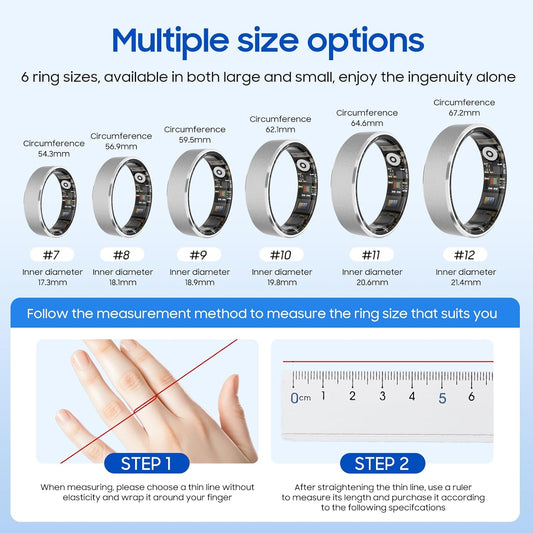
The ring is lightweight (approximately 2-4 grams) with a smooth, low-profile design. Customer reviews consistently note comfort even for all-day and all-night wear. However, individuals with significant finger joint arthritis or swelling should use the included size chart carefully to ensure a proper fit—not too tight (which could be uncomfortable) and not too loose (which could affect sensor accuracy). The silicone band material provides some flexibility. If you have specific concerns, consult your rheumatologist or occupational therapist. See the BKC × ZekNeo size guide →