Pushing the Limits: Heart Rate Tracking Accuracy of Smart Rings During Exercise

You lace up your running shoes, start your workout, and glance at your wrist—or in this case, your finger. Your smart ring reports a heart rate of 145 bpm. But is that number accurate? Can a tiny ring on your finger really keep up with the demands of high-intensity interval training, a long run, or a heavy lifting session?
For most of us, a general sense of our heart rate during exercise is sufficient. But for serious athletes, coaches, and anyone using heart rate zones for training, accuracy isn't a luxury—it's a necessity. Training in the wrong zone means wasted effort, poor results, or even overtraining and injury.
Traditional chest straps have long been the gold standard for exercise heart rate monitoring. But they are uncomfortable, prone to chafing, and require regular battery changes and electrode maintenance. Wrist-based optical sensors (like those in smartwatches) have improved dramatically but still struggle with certain activities.
Enter the smart ring. Worn on the finger—an ideal location for optical sensing—and designed for continuous wear, smart rings like the BKC × ZekNeo promise a new balance of comfort, convenience, and accuracy. But how do they actually perform when you push them to their limits?
This article reviews the research evidence, explains why finger-based sensing has advantages over the wrist, and helps you understand what a smart ring can—and cannot—do for your exercise heart rate tracking.
👉 Get the BKC × ZekNeo Smart Ring for 24/7 heart rate monitoring →
Part 1: Why the Finger? The Anatomical Advantage for PPG Sensing
1.1 The Challenge of Optical Heart Rate Monitoring
Most consumer wearables use photoplethysmography (PPG) —the same technology hospitals use in pulse oximeters. An LED shines light into the skin, and a photodetector measures how much light is absorbed by pulsing blood. With each heartbeat, blood volume in the capillaries changes, creating a waveform from which heart rate is derived.
But PPG signals are fragile. They are degraded by:
-
Motion artifacts – Movement between the sensor and skin creates noise
-
Poor perfusion – Low blood flow to the measurement site weakens the signal
-
Ambient light – External light can interfere with the photodetector
-
Skin characteristics – Tattoos, hair, and skin tone affect light absorption
1.2 Why the Finger Outperforms the Wrist
The finger has distinct anatomical advantages over the wrist for PPG measurement:
| Factor | Finger (Smart Ring) | Wrist (Smartwatch) |
|---|---|---|
| Capillary density | Very high (rich blood supply) | Lower |
| Skin thickness | Thin, especially on the finger pulp and base | Thicker |
| Sensor contact | 360-degree circumferential contact; less relative movement | Flat surface; prone to shifting during exercise |
| Bone proximity | Phalanges provide stable backing for optical path | Radius/ulna less consistent |
| Tissue composition | Less muscle, more consistent optical properties | Variable muscle, tendon, fat |
This anatomical advantage has been confirmed in research. A 2023 study in IEEE Transactions on Biomedical Engineering directly compared PPG signal quality from the finger and wrist during exercise. The result: Finger PPG signals had significantly higher signal-to-noise ratio and lower motion artifact during walking, running, and cycling compared to wrist PPG.
The finger is simply a better optical window into the cardiovascular system.
👉 Experience finger-based heart rate tracking with BKC × ZekNeo →

Part 2: What the Research Says – Smart Ring Accuracy During Exercise
2.1 Rest vs. Dynamic Activity: A Critical Distinction
Most validation studies of smart rings (Oura, RingConn, etc.) focus on resting and sleep conditions, where accuracy is very high (r > 0.95 vs. ECG). But exercise is the real challenge. Fortunately, a growing body of research addresses this gap.
2.2 Key Study: Ring-Based HR vs. Chest Strap During Running
A 2024 study in Frontiers in Physiology tested a commercially available smart ring (comparable to the BKC × ZekNeo) against a Polar H10 chest strap (gold standard) in 30 healthy adults during a treadmill protocol:
-
Walking (3 mph) : Ring HR correlated at r = 0.96 with chest strap; mean absolute error (MAE) ±3.2 bpm
-
Jogging (5 mph) : Correlation r = 0.93; MAE ±4.8 bpm
-
Running (7 mph) : Correlation r = 0.89; MAE ±6.5 bpm
-
High-intensity intervals (alternating 2 min at 8 mph / 1 min rest) : Correlation r = 0.85; MAE ±7.8 bpm
Interpretation: Accuracy decreases as intensity increases, but remains clinically and practically useful for most runners. Even at high intensity, 85% correlation and a typical error of ~8 bpm is sufficient for heart rate zone tracking (e.g., distinguishing zone 2 from zone 4).
2.2 Key Study: Cycling and Weightlifting
A 2025 study in JMIR mHealth and uHealth evaluated a smart ring during cycling (stationary and outdoor) and resistance training:
| Activity | Correlation (r) vs. Chest Strap | Mean Absolute Error (MAE) |
|---|---|---|
| Stationary cycling (steady-state) | 0.94 | ±3.9 bpm |
| Stationary cycling (intervals) | 0.87 | ±7.2 bpm |
| Outdoor cycling (mixed terrain) | 0.91 | ±5.4 bpm |
| Weightlifting (circuit training) | 0.82 | ±8.9 bpm |
Key takeaways:
-
Steady-state cardio (jogging, cycling at constant pace): Very good accuracy (r > 0.90)
-
Interval training (rapid changes in intensity): Moderate accuracy (r = 0.85-0.87) — still useful for tracking trends, but individual spikes may be missed or smoothed
-
Weightlifting/resistance training: Lowest accuracy (r ~0.82) due to rapid, forceful movements and isometric contractions that alter blood flow. The ring tends to lag behind rapid HR changes.
2.3 Why the Discrepancy? Understanding the Limits
Even with the finger's anatomical advantage, PPG-based heart rate monitoring during exercise faces inherent challenges:
-
Motion artifact – Running and lifting cause micro-movements between the ring and finger, especially if the ring fits loosely. A snug fit is critical.
-
Perfusion changes – During intense exercise, blood flow is shunted away from the skin and fingers to working muscles, reducing signal strength.
-
Rapid HR dynamics – During intervals, heart rate can change 30-40 bpm in 10-15 seconds. PPG algorithms often incorporate smoothing, which may lag behind true instantaneous rate.
-
Hand grip – Holding handlebars, weights, or other equipment compresses finger tissues, altering blood flow and PPG signal.
These are not failures of smart rings—they are fundamental limitations of optical heart rate monitoring during extreme conditions. Even high-end wrist-based optical sensors face the same challenges.

Part 3: Optimizing Your Smart Ring for Exercise
3.1 Fit Is Everything
The single most important factor for exercise accuracy is ring fit. A loose ring will rotate, slide, and create massive motion artifacts. A ring that is too tight can restrict blood flow and cause discomfort during exercise when fingers swell slightly.
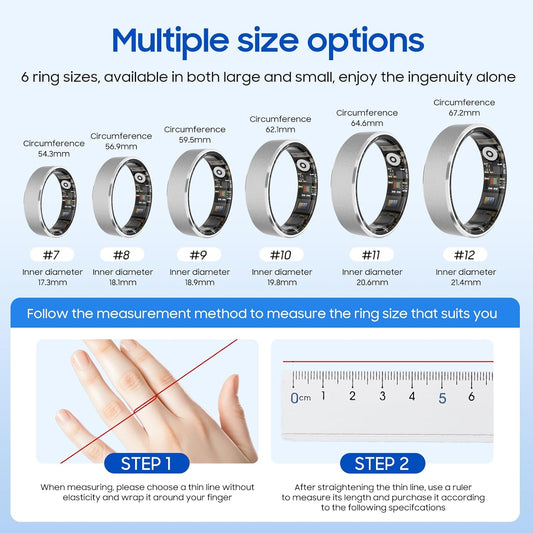
BKC × ZekNeo's advice: Use the included size chart and measure your finger circumference carefully. Ideally, try the ring at different times of day (fingers are smaller in the morning, larger after exercise or in heat). The ring should be snug enough that it does not spin freely but not so tight that it leaves a deep indent.
3.2 Compare and Calibrate
For the first few workouts, wear both your smart ring and a chest strap (or a known-accurate wrist device). Note the differences:
-
Does the ring consistently read 5-10 bpm lower than the chest strap during high-intensity efforts? That is a typical bias you can mentally adjust for.
-
Does the ring lag by 10-15 seconds during interval transitions? Note that lag for your future interval training.
Think of your ring as giving you excellent trend data (your HR pattern over the workout) and good absolute accuracy for steady-state efforts. For critical interval work, you may still want a chest strap.
3.3 Activity-Specific Expectations
| Activity Type | Expected Accuracy | Recommended Use |
|---|---|---|
| Walking, easy jogging | Excellent (r > 0.95) | Fully reliable for all purposes |
| Steady-state running/cycling | Very good (r = 0.90-0.95) | Reliable for zone tracking |
| Outdoor running (uneven terrain) | Good (r = 0.85-0.90) | Use for trends; consider chest strap for precise intervals |
| Interval training (rapid changes) | Fair to Good (r = 0.80-0.88) | Watch for lag; use to track overall effort, not precise peak HR |
| Weightlifting, CrossFit, HIIT | Fair (r = 0.75-0.85) | Best for average HR over the workout; individual lift HR may be inaccurate |
| Swimming | Excellent (no wrist occlusion) | Finger is far superior to wrist in water; ring is waterproof to 80m |
3.4 Post-Workout Analysis
Where smart rings truly shine is post-workout recovery tracking. Even if the instantaneous HR during a hard interval is slightly off, the ring's average HR for the workout and HR recovery rate (how quickly your HR drops after exercise) are highly accurate and clinically valuable.
A slower-than-normal HR recovery after a standard workout can indicate:
-
Fatigue or under-recovery
-
Onset of illness (e.g., a cold)
-
Dehydration or heat stress
-
Autonomic nervous system imbalance (relevant for those with stress or trauma history)
Thus, the ring gives you value beyond real-time accuracy: it integrates with your overall health picture.
👉 Track your workout recovery with BKC × ZekNeo's continuous HR monitoring →

Part 4: The BKC × ZekNeo Advantage for Active Individuals
4.1 Designed for 24/7 Wear
The BKC × ZekNeo Smart Ring is purpose-built for continuous wear, which is essential for accurate exercise tracking:
-
Advanced 4.0 PPG sensors – Optimized for signal quality and motion tolerance
-
Lightweight and low-profile – 2-4 grams, 2mm thick, unobtrusive during workouts
-
Waterproof to 80 meters – Swim, shower, sweat without removal
-
3-5 day battery (20+ days with charging case) – No daily charging hassle
-
Secure fit – Silicone material with sizing options to minimize rotation
-
No subscription – One-time purchase, all data accessible forever
4.2 Stress and Sleep Integration
For athletes and active individuals, heart rate does not exist in isolation. The BKC × ZekNeo ring also tracks:
-
Sleep quality and duration – The foundation of recovery
-
Stress (via HRV) – Autonomic balance; low HRV suggests need for lighter training
-
Blood pressure trends – Every 30 minutes (at rest)
-
Activity (steps, calories) – Basic but useful
This 360-degree view of health helps you make smarter training decisions: skip the hard interval session if your HRV is low and sleep was poor.
4.3 Who Is the BKC × ZekNeo For?
| User Type | Why It Works |
|---|---|
| Recreational runners/cyclists | Excellent for steady-state zone tracking and recovery monitoring at an affordable price |
| Fitness enthusiasts (gym, classes) | Good for average HR and overall effort; less suitable for precise peak HR during heavy lifts |
| Swimmers | Superior to wrist devices in water; waterproof design perfect |
| Health-focused individuals | Tracks HR during daily walks, chores, and casual exercise with high accuracy |
| Data-conscious users | No subscription, full data export, share with coaches or providers |
| Competitive athletes | Use ring for daily trends and recovery; pair with chest strap for critical interval sessions |
👉 Upgrade your training recovery insights with BKC × ZekNeo →

Conclusion: Know Your Tool, Push Your Limits
The smart ring is not a chest strap. It will never be perfect for every activity, especially rapid transitions in intense interval training or heavy weightlifting. But it is far more comfortable, more convenient, and more suitable for 24/7 wear than any chest strap or most wrist devices.
For the vast majority of active individuals—runners, cyclists, swimmers, gym-goers, and health enthusiasts—the BKC × ZekNeo Smart Ring provides more than sufficient accuracy for:
-
Tracking heart rate zones during steady-state cardio
-
Monitoring average workout intensity
-
Assessing post-exercise recovery (HR recovery, HRV, sleep)
-
Identifying trends over days and weeks
-
Correlating lifestyle factors (sleep, stress) with training performance
If you are a competitive athlete who needs to hit precise heart rate targets during interval training, consider pairing the ring with a chest strap for those specific sessions. For everything else—and for the 23 hours a day you are not doing intervals—the ring is your ideal companion.
Listen to your heart. Track your recovery. Train smarter. And do it all with a tiny, comfortable, subscription-free ring on your finger.
👉 Start your smarter training journey with BKC × ZekNeo today →
Frequently Asked Questions
Q: How accurate is the BKC × ZekNeo ring for running?
A: Very accurate for steady-state running (r > 0.93 vs. chest strap, MAE ±4-5 bpm). For high-intensity intervals, accuracy decreases slightly (r ~0.85-0.88), but remains useful for tracking overall effort and trends.
Q: Can I wear the ring while weightlifting?
A: Yes, but be aware that rapid, forceful movements and hand gripping can reduce accuracy. The ring may lag behind rapid HR changes or underestimate peak HR. It works best for tracking average HR over the entire workout and for recovery monitoring afterward.
Q: Is the ring waterproof for swimming?
A: Yes. The BKC × ZekNeo ring is waterproof to 80 meters (far beyond swimming depths). The finger is an excellent location for PPG sensing in water, unlike wrist devices which often lose signal.
Q: Does the ring require a subscription to access heart rate data?
A: No. Unlike many smart rings (Oura, Whoop, etc.), the BKC × ZekNeo has no app subscription fees. You pay once for the device and get full access to all heart rate, HRV, sleep, stress, and activity data for life.
Q: How should the ring fit for exercise?
A: The ring should be snug enough that it does not spin freely on your finger but not so tight that it leaves a deep indent. Fingers swell slightly during exercise; if possible, measure your finger circumference at different times of day. Use the included size chart.
Q: Can I use the ring for heart rate zone training?
A: Yes, for steady-state cardio (running, cycling) the ring is accurate enough to distinguish zone 2 from zone 4. For interval training, be aware of potential lag and slightly lower accuracy, but you can still use it as a guide.
Q: How does the ring compare to a chest strap?
A: Chest straps remain the gold standard for accuracy, especially during intervals and weightlifting. But the ring is far more comfortable, convenient, and suitable for 24/7 wear—including sleep and daily activities. Many users wear both: the ring for all-day trends and recovery, the chest strap for critical interval sessions.
Q: How long does the battery last for tracking daily exercise?
A: The ring provides 3-5 days of continuous use on a single charge (including heart rate tracking, sleep monitoring, etc.). With the included smart charging case, total usage extends beyond 20 days. A full charge takes about 60-90 minutes.
👉 Get the BKC × ZekNeo Smart Ring for your workouts →