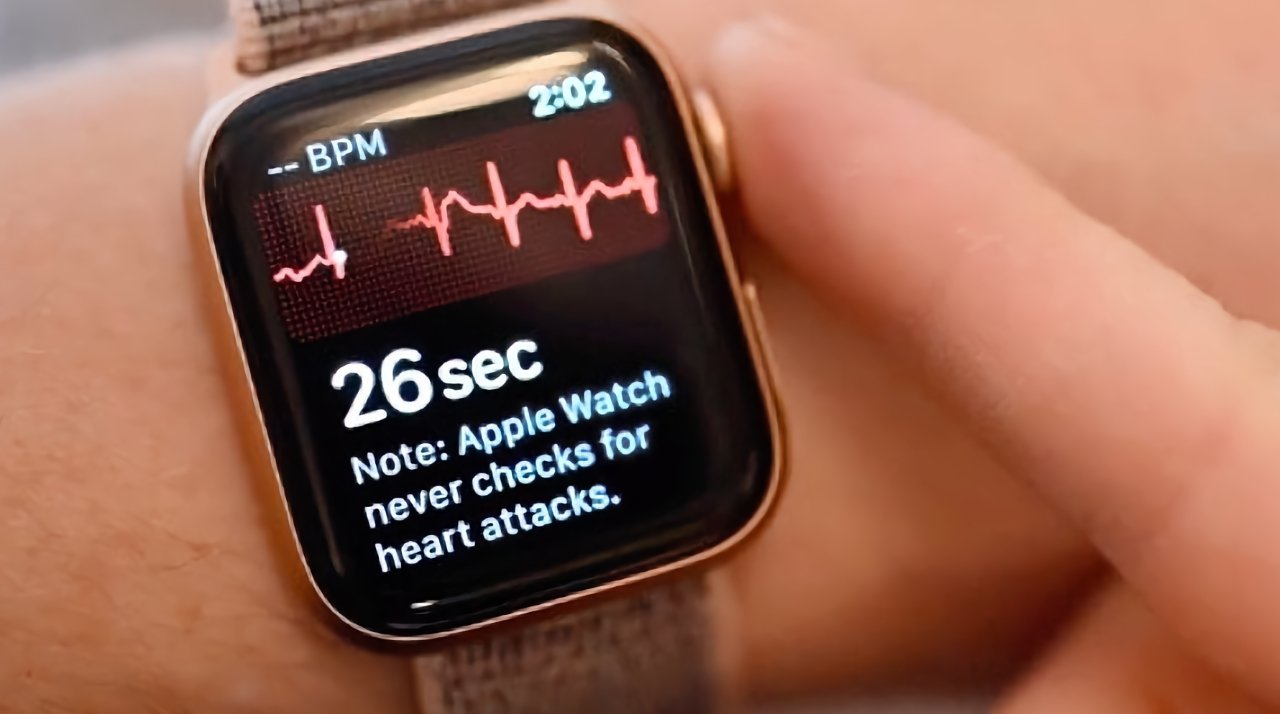
Wrist-Based HRV Measurement: How PPG Compares to ECG

## 30-Second Summary
- **Photoplethysmography (PPG) uses light to detect blood volume changes**—offering a more feasible, accessible alternative to ECG for daily HRV tracking .
- **Validation studies show strong agreement** between PPG and ECG under controlled conditions, with near-perfect correlations (r = 0.91–1.00) for key HRV metrics .
- **But PPG has real limitations**—motion artifacts, environmental noise, and variability in pulse arrival time (PAT) can reduce accuracy, especially during activity .
- **RMSSD is particularly affected by PPG's inherent error**—a simulation study found only 21.4% of PPG-derived RMSSD values fell within the practical equivalence zone compared to ECG .
- **SDNN performs better**—the same study found 88.4% of PPG-derived SDNN values were equivalent to ECG under ideal conditions .
- **Bottom line**: PPG is excellent for tracking trends at rest, but caution is needed during movement or when interpreting absolute values .
---
## Introduction: The Promise and Challenge of PPG
For years, accurate heart rate variability (HRV) measurement required chest straps or ECG electrodes—uncomfortable, inconvenient, and impractical for daily use. Photoplethysmography (PPG) changed that.
PPG is an optical technique that detects changes in blood volume in the vasculature at the recording site . A PPG sensor consists of a light-emitting diode and a light-detecting diode. As the amount of light detected changes with blood volume, a pulsatile waveform is produced. Each peak indicates a heartbeat, and the variability between peaks—known as pulse rate variability—can be used to estimate HRV .

The advantages are clear: PPG is easier to use, more convenient, and requires just a sensor placed over a peripheral pulse location—wrist, finger, or even earlobe . But is it accurate enough? This article examines what the research actually says.
---
## The Science: How PPG Compares to ECG
### Strong Validity Under Controlled Conditions
A 2025 validation study published in *Sports* examined the concurrent validity of a PPG finger sensor against both ECG and chest heart rate monitors. The results were compelling: near-perfect relationships (r = 0.91–1.00) and very large-to-near-perfect agreement (CCC = 0.81–1.00) were identified between collection methods . The PPG sensor overestimated HRV metrics by less than 0.5 ms—a trivial difference.
A separate 2025 study in *Nature's Scientific Reports* validated a wrist-worn PPG device (Bora band) against high-resolution 12-lead ECG in 66 participants. Strong agreement was observed for:
- **Mean heart rate** (ρ = 1.0)
- **SDNN** (ρ = 0.98)
- **Coefficient of variation** (ρ = 0.98)
- **Poincaré Plot SD2** (ρ = 0.99)
Bland-Altman analysis indicated minimal bias without systematic error .

### The Limitations: Where PPG Falls Short
**1. RMSSD Is Less Reliable**
The most widely used time-domain HRV metric, RMSSD, shows significant challenges in PPG measurement.
A 2024 simulation study in *Sports Medicine* examined the dissociation between ECG-derived HRV and PPG-derived PRV (pulse rate variability). The study found that **for individuals with greater pulse arrival time (PAT) variability, PRV is not a surrogate for HRV** .
The results were striking: with the lowest PAT variability, only **21.4% of PPG-derived RMSSD values** fell within the Region of Practical Equivalence (ROPE) compared to true HRV. As PAT variability increased, equivalence decreased further .
**2. Motion Artifacts Are a Major Problem**
PPG is highly susceptible to motion artifacts and environmental noise—a well-documented limitation . A study comparing PPG with ECG found that the PPG signal is "especially vulnerable to motion artifacts when compared to the ECG, preventing any HRV analysis at all in a significant minority of PPG recordings" .

A 2025 review of in-vehicle PPG applications confirmed this: "blood volume pulse derived from PPG can provide reliable heart rate estimates and support extraction of certain HRV features, its utility in accurately capturing high-frequency HRV components remains constrained due to motion-induced noise and signal distortion" .
**3. Real-World Performance Is Weaker**
A long-term real-world study comparing a PPG smartwatch against a chest-worn ECG sensor found:
- **Median IBI** (heart rate): moderate agreement (ICC = 0.585)
- **LF power**: moderate consistency (ICC = 0.545)
- **Other HRV metrics**: poor agreement (ICC = 0.071–0.472)
The study concluded that "while smartwatches containing PPG sensors are valuable for remote monitoring of patients, future work is needed to identify best practices for using these sensors to evaluate HRV in medical settings" .

**4. Missing Data Affects Reliability**
The same real-world study found that during activity, median IBI and RMSSD became unstable with just 10% data degradation—meaning frequent interruptions in tracking can compromise data quality .
Frequency-domain metrics (LF, HF, LF/HF) were even more sensitive, becoming unstable with only 10% missing data during both rest and activity .
---
## How PPG-Based Wearables Can Still Be Useful
Despite these limitations, PPG remains highly valuable—**if used correctly**.
### Where PPG Excels
| Condition | PPG Performance | Recommendation |
|:----------|:----------------|:---------------|
| **Resting, stationary** | Excellent—near-perfect correlation with ECG | Use with confidence |
| **Controlled breathing** | Good—valid during slow-paced breathing protocols | Ideal for biofeedback |
| **Overnight (sleep)** | Moderate—less movement, stable conditions | Good for trend tracking |
| **During exercise** | Poor—motion artifacts degrade accuracy | **Avoid** for real-time HRV |
| **Walking/movement** | Variable—depends on intensity | Caution needed |
### Best Practices for PPG HRV Tracking
1. **Measure at rest**: Supine or seated positions provide the most reliable data .
2. **Consistent timing**: Morning readings (after waking, before eating) are recommended.
3. **Focus on trends, not absolute values**: The agreement is strong for tracking direction and magnitude of change.
4. **Consider SDNN over RMSSD**: SDNN shows more favorable measurement properties than RMSSD for PPG-based tracking .
5. **Multiple nights for baseline**: Overnight averaging over multiple nights reduces the impact of occasional signal loss.
6. **Use quality assessment algorithms**: Deep learning approaches have achieved 95.6% accuracy for HR and 91.4% for RMSSD quality classification .

---
## Summary Table: PPG vs. ECG HRV Metrics
| Metric | PPG Performance vs. ECG | Best Use Case |
|:-------|:------------------------|:--------------|
| **Heart Rate** | Excellent (ρ = 1.0) | Any setting |
| **SDNN** | Strong (ρ = 0.98) | Trend tracking |
| **RMSSD** | Weak (only 21.4% equivalence) | Use with caution—prefer SDNN |
| **LF/HF** | Moderate agreement | Use for trends, not absolute values |
| **High-frequency power** | Moderate | Limited—better for ECG |
---
## Final Thoughts
The evidence is clear: PPG can provide reliable HRV estimates **under controlled, resting conditions**. For athletes and health-conscious individuals tracking overnight recovery trends, PPG-based wearables like the BKC × ZekNeo Smart Bracelet offer a comfortable, accessible, and scientifically valid solution.
But PPG is not a replacement for ECG in clinical settings or during exercise. The technology has real limitations—particularly motion artifacts, RMSSD measurement error, and data loss during activity . The best way to use PPG HRV data is to **establish a consistent measurement routine, track trends over time, and avoid overinterpreting single readings**.
As a 2025 validation study concluded: "Under controlled resting conditions, wrist-based PPG provides reliable HRV indices compared with ECG-derived HRV. These findings support the use of selected PPG-derived HRV parameters for short-term assessment in clinical settings. Further validation in real-world settings will be necessary" .
---
*Note: This article is for educational purposes only and does not constitute medical advice. Always consult with a healthcare professional regarding your heart health and any symptoms you may experience. The BKC × ZekNeo Smart Bracelet is designed for daily wellness tracking and trends, not professional-level medical precision.*