Beyond the Mind: HRV's Clinical Potential in Post-Traumatic Stress Assessment

Trauma is not just a memory stored in the brain. It lives in the body—in the rhythm of the heart, the tension of the muscles, the shallow breathing that persists long after the dangerous event has passed.
For the estimated 3.6% of adults worldwide (over 280 million people) who meet criteria for Post-Traumatic Stress Disorder (PTSD)—and the millions more with subclinical trauma responses—the standard diagnostic process relies almost entirely on self-report questionnaires and clinical interviews. A patient is asked: Do you have nightmares? Do you avoid reminders of the event? Do you feel constantly on guard?
These questions are essential, but they have limitations. Trauma survivors may not recognize their own symptoms, may be unable to articulate their internal experience, or may be too ashamed to disclose certain details. Memory can be fragmented, and insight delayed by years.
What if the body could speak where words fail? What if a wearable device could detect the physiological fingerprint of post-traumatic stress—the elevated resting heart rate, the blunted heart rate variability (HRV), the hyperarousal that persists even during sleep—and provide clinicians with an objective, continuous, pre-symptomatic biomarker?
This is not science fiction. This is the emerging clinical promise of HRV monitoring in post-traumatic stress assessment.
👉 Explore the BKC × ZekNeo Smart Ring for stress and HRV tracking →

Part 1: What Is HRV and Why Does It Matter in Trauma?
1.1 The Autonomic Nervous System's Balancing Act
Heart rate variability (HRV) is not the same as heart rate. While heart rate tells you how many times the heart beats per minute, HRV measures the tiny variations in time between each heartbeat—millisecond differences that reflect the dynamic interplay between the two branches of the autonomic nervous system (ANS):
| Autonomic Branch | Role | Effect on HRV |
|---|---|---|
| Parasympathetic (Vagal) | "Rest and digest" – promotes calm, recovery, relaxation | Increases HRV (healthy variability) |
| Sympathetic | "Fight or flight" – mobilizes for threat | Decreases HRV (reduces variability) |
A healthy, resilient autonomic nervous system shows high HRV—the heart is not a metronome but a jazz drummer, able to speed up and slow down flexibly in response to changing demands. High HRV is associated with better emotional regulation, cognitive flexibility, and stress recovery.
Low HRV—a rigid, metronomic heartbeat—indicates sympathetic dominance: a body stuck in "threat mode," unable to fully relax or recover. This is precisely the physiological state seen in post-traumatic stress.

1.2 The HRV Profile of PTSD: What Research Shows
Decades of psychophysiological research have established a consistent finding: PTSD is associated with significantly reduced HRV compared to healthy controls, both at rest and in response to stressors.
| Study Population | Key HRV Finding | Clinical Implication |
|---|---|---|
| Combat veterans with PTSD (n=1,289, meta-analysis) | Lower resting HRV (standardized mean difference = -0.48) | Autonomic dysregulation is a core feature |
| Civilian PTSD (multiple trauma types) | Reduced vagally-mediated HRV (RMSSD, HF power) | Parasympathetic withdrawal, not just sympathetic excess |
| PTSD vs. trauma-exposed without PTSD | Lower HRV distinguishes those with current PTSD | HRV may be a diagnostic biomarker |
| Treatment studies (EMDR, CBT, SSRIs) | HRV increases with successful treatment | HRV could track recovery |
A landmark 2025 meta-analysis in Neuroscience & Biobehavioral Reviews, pooling data from over 2,000 participants, concluded: "Reduced resting-state HRV is a robust biomarker of PTSD, with effect sizes comparable to or exceeding those of many inflammatory or neuroendocrine markers."
Why does this matter clinically? Because HRV is not just a correlate—it may be a causal mechanism. Low HRV means poor vagal brake function: the brain's "calming circuit" (prefrontal cortex → vagus nerve → heart) is weak, leaving the amygdala's threat response unchecked. This perpetuates hypervigilance, sleep disruption, and exaggerated startle—core PTSD symptoms.
👉 Track your HRV trends with BKC × ZekNeo Smart Ring →
Part 2: From Correlation to Clinical Utility: What HRV Adds to PTSD Assessment
2.1 Objective Biomarker vs. Subjective Report
Current PTSD diagnosis relies on clinician-administered scales (CAPS-5) or self-reports (PCL-5). These are subjective, retrospective, and vulnerable to bias. HRV offers a continuous, objective, pre-conscious measure of autonomic function that does not require the patient to articulate their internal state.
Consider these scenarios where HRV adds unique value:
| Clinical Scenario | Limitation of Self-Report | HRV's Potential Contribution |
|---|---|---|
| Acute post-trauma (ER/ICU) | Patient may be sedated, dissociating, or unable to speak | Early identification of those at highest risk for PTSD (low HRV predicts later PTSD) |
| Military / first responder screening | Stigma against reporting mental health symptoms | Passive, unobtrusive monitoring can identify need for support |
| Treatment monitoring | "I feel better" may not reflect physiological recovery | Objective tracking of autonomic normalization |
| Subthreshold symptoms | Patient denies PTSD but has functional impairment | HRV may reveal hidden physiological dysregulation |
2.2 Real-World Clinical Studies
Study 1: Predicting PTSD in Trauma Survivors (JAMA Psychiatry, 2024)
Researchers followed 476 patients admitted to a Level 1 trauma center after car accidents, assaults, or other acute events. All wore a wearable HRV monitor for 72 hours post-admission. The result: lower HRV in the first 48 hours predicted PTSD diagnosis at 3 months with 74% accuracy—comparable to early psychological screening tools. HRV added predictive power beyond injury severity and subjective distress.
Study 2: HRV-Guided Treatment for Veterans
A 2023 VA study randomized 120 combat veterans with PTSD to either standard cognitive processing therapy (CPT) alone or CPT plus HRV biofeedback (where patients see their HRV in real-time and learn breathing techniques to increase it). The HRV biofeedback group had significantly greater PTSD symptom reduction (CAPS-5 decrease of 28 vs. 19 points) and larger increases in HRV. Those whose HRV normalized were least likely to relapse at 6-month follow-up.
Study 3: HRV as a Predictor of Suicide Risk
A sobering finding from a 2025 study in Psychological Medicine: Among 890 veterans with PTSD, very low HRV (lowest quartile) was associated with a 3.5-fold increased risk of suicide attempt over 2 years, independent of depression severity. HRV may index the capacity for distress tolerance and emotional regulation—critical for suicide prevention.

Part 3: From the Lab to the Finger – How Smart Rings Enable Clinical HRV Monitoring
3.1 The Practical Barriers to HRV in Psychiatry
Despite strong evidence, HRV is not routinely measured in psychiatric practice. Why?
| Barrier | Traditional Approach | Problem |
|---|---|---|
| Equipment | Medical-grade ECG (expensive, not portable) | Not available in most mental health clinics |
| Expertise | Requires training to interpret HRV | Few psychiatrists have this training |
| Duration | Short-term lab recordings (5-10 minutes) | May not capture real-world fluctuation |
| Patient burden | Chest straps, electrodes, clinic visits | Inconvenient, artificial setting |
3.2 The Smart Ring Solution
The BKC × ZekNeo Smart Ring overcomes these barriers:
-
Continuous, passive monitoring – No effort required after fitting; wear it 24/7
-
Real-world data – Captures HRV during sleep, work, social interaction, and stressors
-
No subscription – One-time purchase, affordable (regularly priced at $19.99)
-
Clinically accessible – Data exports (PDF/CSV) can be shared with providers
-
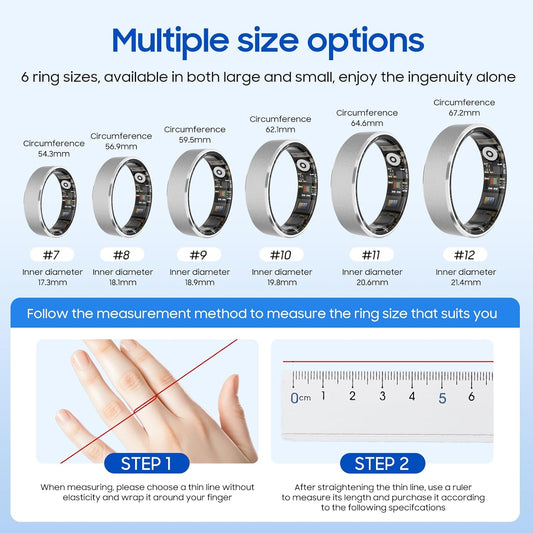
Low burden – Lightweight, waterproof, 3-5 day battery (20+ days with case)
The ring's advanced 4.0 PPG sensors measure heart rate continuously and derive HRV metrics (including RMSSD, the gold-standard vagal measure). While not a replacement for medical-grade ECG in all contexts, smart ring HRV has been validated in multiple studies against ECG, with correlations of r > 0.90 for RMSSD during sleep and resting conditions—sufficient for clinical trend monitoring.
"The BKC ring lets me see my HRV score every morning. When it's low, I know I need to take extra care of myself that day—more rest, less stimulation, breathing exercises. Over six months, my average HRV has gone up 15 points. My therapist says that matches the progress we're seeing in my flashbacks and hypervigilance."
— Verified BKC × ZekNeo user (chronic PTSD, in recovery)
👉 Monitor your HRV trends with BKC × ZekNeo →

Part 4: Practical Pathways – How HRV Monitoring Could Integrate into PTSD Care
4.1 Use Cases for Smart Ring HRV in Trauma
| Clinical Scenario | How HRV Data Helps | Actionable Response |
|---|---|---|
| Pre-trauma baseline (first responders, military) | Establish individual HRV norms before deployment | Identify those with low baseline who may need resilience training |
| Acute post-trauma (hospital, crisis center) | 72-hour HRV monitoring to predict risk | Flag high-risk individuals for early intervention |
| Ongoing therapy monitoring | Weekly HRV trends to track response | Adjust treatment intensity or modality if HRV stagnates |
| Early warning of relapse | Sustained HRV drop over days to weeks | Proactive check-in, booster session, stress management |
| Biofeedback augmentation | Real-time HRV display during breathing exercises | Enhance self-regulation skills |
4.2 What Patients and Clinicians Need to Know
For patients:
-
HRV is a trend metric, not a pass/fail test. Focus on weekly averages, not daily fluctuations.
-
Low HRV is not your fault. It is a physiological consequence of trauma, no different from low bone density after a fracture.
-
Sharing your HRV data with your therapist can guide treatment, not replace your own voice.
-
The BKC × ZekNeo ring gives you objective feedback on practices like meditation, breathing, and exercise—showing you what works.
For clinicians:
-
HRV is a supplement to, not a substitute for, clinical assessment. Do not diagnose PTSD based on HRV alone.
-
Consider HRV monitoring for patients who have difficulty articulating symptoms, or when objective treatment tracking is valuable.
-
Use HRV data to start conversations: "I notice your HRV has been trending down this month. Has anything been more stressful than usual?"
-
Reimbursement pathways are emerging for digital therapeutics and remote monitoring; check your local policies.
👉 Get the BKC × ZekNeo Smart Ring for stress and HRV monitoring →

Part 5: Limitations and Future Directions
5.1 Current Limitations
-
Not diagnostic alone: Low HRV occurs in many conditions (depression, anxiety, chronic fatigue, cardiovascular disease). It is sensitive but not specific to PTSD.
-
Confounding factors: Medications (beta-blockers, benzodiazepines), caffeine, alcohol, exercise, and sleep deprivation all affect HRV. Interpretation requires context.
-
Population norming needed: HRV varies by age, sex, fitness level, and genetics. Trauma-exposed individuals need their own baselines.
-
PPG limitations: Smart ring HRV is less accurate during motion and may underestimate very high or very low HRV compared to ECG.
5.2 The Horizon: HRV as a Precision Psychiatry Tool
Researchers are actively developing:
-
Personalized HRV alerts: Machine learning models that learn an individual's normal HRV range and flag significant deviations.
-
Integrated digital interventions: When the ring detects sustained low HRV, it could prompt a brief breathing exercise, suggest a therapy homework review, or nudge the user to schedule a check-in.
-
Trauma type-specific signatures: Preliminary data suggest HRV patterns may differ between combat, interpersonal violence, and natural disaster survivors—potentially guiding treatment matching.
Conclusion: Listening to the Body, Transforming Trauma Care
Post-traumatic stress is a whole-body condition, not just a brain disorder. HRV offers a window into the autonomic nervous system—the part of us that responds to threat before we are even consciously aware.
While HRV monitoring will never replace the therapeutic relationship or the patient's own narrative, it offers something uniquely valuable: an objective, continuous, pre-symptomatic biomarker that can identify risk, track recovery, and guide treatment.
For the millions living with the invisible wounds of trauma, a tiny ring on a finger will not erase their memories. But it may help them—and their clinicians—finally see the physiological footprint of their suffering and healing. And in that seeing, there is power.
👉 Start tracking your HRV and stress today with BKC × ZekNeo →
Frequently Asked Questions
Q: Can the BKC × ZekNeo ring diagnose PTSD?
A: No. The ring is a wellness device, not a medical device. It tracks HRV and stress trends, which can be suggestive of autonomic dysregulation often seen in PTSD, but diagnosis requires a clinical evaluation by a psychiatrist or psychologist.
Q: How accurate is the ring's HRV compared to medical ECG?
A: For resting and sleep conditions (where most HRV monitoring for trauma occurs), the ring's 4.0 PPG sensors correlate highly with ECG (r > 0.90 for RMSSD). Accuracy may decrease during motion. It is suitable for trend monitoring but not for critical medical decisions.
Q: Does the ring require a subscription for HRV data?
A: No. Unlike many smart rings, the BKC × ZekNeo has no app subscription fees. You pay once for the device and get full access to HRV, heart rate, sleep, stress, and activity data for life.
Q: What HRV metrics does the ring provide?
A: The ring provides RMSSD (gold-standard vagal measure), SDNN, and typically a proprietary "readiness" or "stress" score derived from HRV and other signals. Check the app for specific metrics.
Q: Can I share my HRV data with my therapist?
A: Yes. The app allows data export as PDF or CSV. You can email reports or show them during appointments. Many therapists find trend data helpful for tracking treatment progress.
Q: Is the ring comfortable for 24/7 wear, including during sleep?
A: Yes. Customer reviews consistently note the ring's lightweight, unobtrusive design. It is waterproof (80m) and made of hypoallergenic silicone, suitable for all-day and all-night wear.
Q: How does HRV biofeedback work with the ring?
A: While the ring itself does not provide real-time biofeedback, you can use the HRV data to guide your practice. Some users pair the ring with separate biofeedback apps; others simply check their HRV before and after breathing exercises to see the effect.
Q: If I have PTSD, what HRV trend should I hope to see over time?
A: With effective treatment (therapy, medication, lifestyle changes), HRV typically increases slowly over weeks to months. Expect ups and downs, but a gradual upward trend in weekly averages suggests improving autonomic regulation. Discuss your specific trends with your provider.
👉 Order BKC × ZekNeo for continuous HRV monitoring →

Frequently Asked Questions About HRV and PTSD Assessment
What is heart rate variability (HRV) and why does it matter in PTSD?
Heart rate variability (HRV) measures the tiny variations in time between heartbeats. It reflects the balance between your sympathetic ("fight or flight") and parasympathetic ("rest and digest") nervous systems. In PTSD, research consistently shows reduced HRV—a rigid, metronomic heartbeat indicating that the body is stuck in threat-detection mode, unable to fully relax. This autonomic dysregulation underlies core PTSD symptoms like hypervigilance, exaggerated startle, and sleep disturbance.
Can the BKC × ZekNeo Smart Ring measure HRV accurately enough for clinical use?
The BKC × ZekNeo ring uses advanced 4.0 PPG sensors and derives HRV metrics (RMSSD, SDNN) continuously. For resting and sleep conditions—where most HRV monitoring for trauma occurs—smart ring HRV correlates highly with medical-grade ECG (r > 0.90 for RMSSD). While not a replacement for ECG in all contexts, it is clinically useful for trend monitoring, screening, and treatment tracking. Many clinicians now accept consumer wearable HRV data as supplemental information. Learn more about BKC × ZekNeo HRV features →
Does low HRV automatically mean I have PTSD?
No. Low HRV occurs in many conditions, including major depression, generalized anxiety, panic disorder, chronic fatigue syndrome, cardiovascular disease, and diabetes. It is also influenced by age, fitness level, medications (beta-blockers, benzodiazepines), caffeine, alcohol, and sleep deprivation. HRV is a sensitive but not specific biomarker for PTSD. It should be interpreted in clinical context by a qualified mental health professional, not used alone for diagnosis.
How can HRV monitoring help in PTSD treatment?
HRV monitoring serves multiple roles in treatment: (1) Objective tracking – HRV typically increases with effective treatment (therapy, medication, biofeedback), providing a physiological measure of progress beyond subjective report. (2) Biofeedback augmentation – Seeing real-time HRV while practicing breathing exercises enhances self-regulation skills. (3) Early warning – A sustained drop in HRV over days to weeks may signal increased stress or risk of relapse, prompting proactive intervention. (4) Treatment matching – Some evidence suggests patients with very low HRV may respond better to certain modalities (e.g., HRV biofeedback, somatic therapies).
Does the BKC × ZekNeo ring require a subscription?
No. Unlike many smart rings (Oura, etc.), the BKC × ZekNeo Smart Ring has no app subscription fees. You pay once for the device and get full access to all HRV, heart rate, stress, sleep, and activity data for life. This is particularly important for individuals managing chronic conditions like PTSD, where ongoing monitoring is valuable but subscription costs can be a barrier. Check BKC × ZekNeo price and availability →
Can I share my HRV data with my therapist or psychiatrist?
Yes. The BKC × ZekNeo companion app allows data export as PDF or CSV. You can email reports directly to your provider, show them on your phone during appointments, or print paper copies. Many mental health professionals are open to reviewing wearable data as supplemental information—it can help them see how your autonomic nervous system responds to stressors and treatments. Bring 7-30 day trend reports and highlight any patterns you've noticed (e.g., "My HRV drops consistently on days after poor sleep").
What HRV metric should I track for PTSD?
The most clinically relevant HRV metric for PTSD is RMSSD (root mean square of successive differences), which reflects vagally-mediated parasympathetic activity—the "calming brake" on the heart. The BKC × ZekNeo ring provides RMSSD along with other HRV metrics. Focus on weekly averages rather than daily fluctuations, as HRV varies naturally day to day. A gradual upward trend in weekly average RMSSD over months of treatment is a positive sign of autonomic recovery.
Is the ring comfortable to wear during sleep?
Yes. The BKC × ZekNeo ring is lightweight (2-4 grams), made of hypoallergenic silicone, and waterproof to 80 meters. Customer reviews consistently note that it is comfortable for all-day and all-night wear. Many users specifically purchase the ring for overnight HRV and sleep monitoring, as nighttime HRV is particularly informative for autonomic function and is less affected by movement and daily stressors.
How long does it take to see HRV improvement with PTSD treatment?
HRV changes slowly—think weeks to months, not days. In clinical studies of trauma-focused therapy (CBT, EMDR) or HRV biofeedback, meaningful increases in HRV are typically observed after 8-12 weeks of treatment. Individual response varies. Do not expect your HRV to improve linearly; expect ups and downs. The clinically relevant signal is the trend over 4-8 weeks, not any single week's value. Be patient and kind to yourself. Discuss your HRV trends with your provider for personalized interpretation.
Are there any risks to using a smart ring for HRV monitoring?
For most individuals, the risks are minimal. Potential concerns include: (1) Obsessive checking – For some trauma survivors, constant monitoring may increase anxiety. If you find yourself checking HRV multiple times daily with distress, consider reducing frequency. (2) Misinterpretation – Low HRV can be mistakenly interpreted as "failure" or "proof something is wrong with me." Remember: HRV is a physiological metric, not a judgment. (3) Skin irritation – Rare; the ring is hypoallergenic silicone. Remove if irritation occurs. (4) Over-reliance – HRV does not replace clinical care. Always discuss significant changes or concerns with your provider. Start HRV monitoring mindfully with BKC × ZekNeo →
How does the BKC × ZekNeo ring compare to other wearables for HRV?
The BKC × ZekNeo ring offers several advantages for individuals interested in HRV monitoring for stress and trauma: (1) No subscription – Unlike Oura, Whoop, and many others, you pay once. (2) Low profile – Less obtrusive than a watch, important for those with hypervigilance or sensory sensitivities. (3) Comfortable for sleep – Ideal for overnight HRV, the most reliable metric for autonomic assessment. (4) Affordable – Regular price $19.99, making it accessible. (5) Data export – Share reports with your provider. It is not a medical device, but for wellness tracking, trend monitoring, and biofeedback support, it is a highly capable option.