HRV Monitoring Accuracy Compared: Smart Ring vs. ECG

Can a Tiny Ring Match a Medical ECG?
Heart Rate Variability (HRV) has emerged as one of the most powerful biomarkers for stress, recovery, and overall autonomic nervous system health. But HRV data is only as useful as its accuracy.
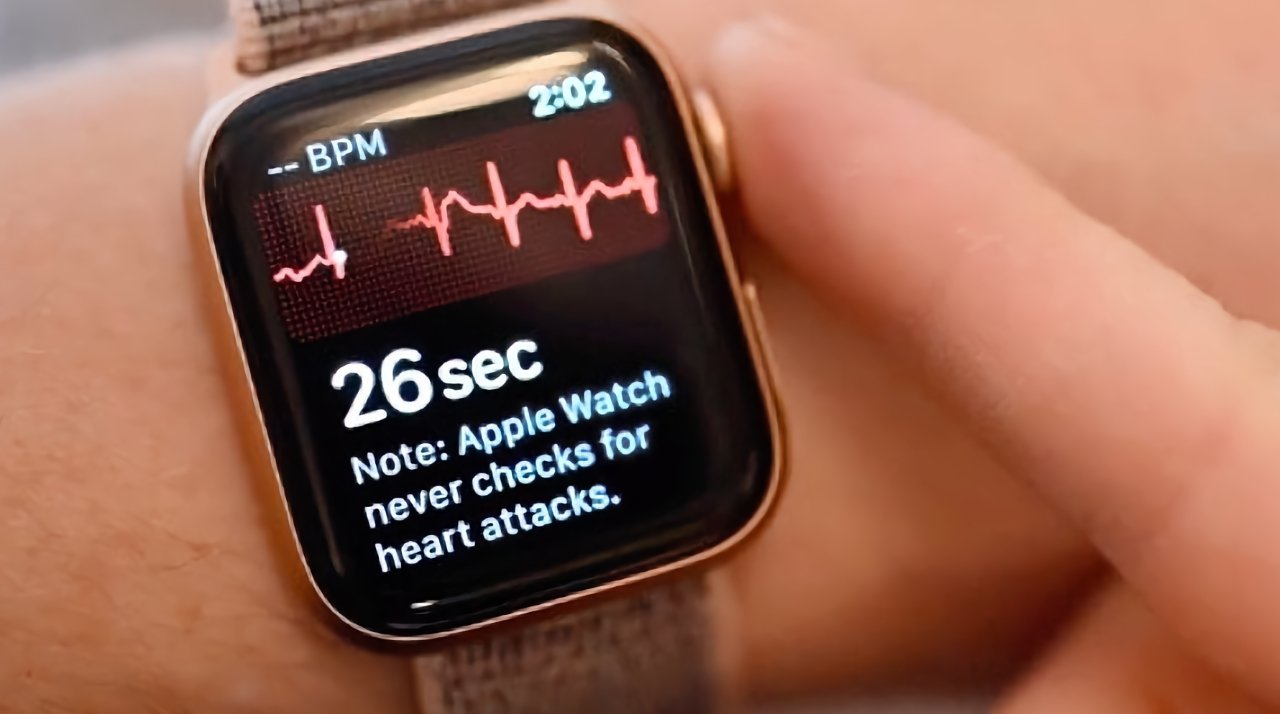
The gold standard for HRV measurement is the electrocardiogram (ECG) – a medical device that captures the electrical activity of your heart through electrodes placed on your chest. It is precise, validated, and expensive.
On the other hand, smart rings use photoplethysmography (PPG) – shining light into your finger to detect blood volume changes with each heartbeat . This method is convenient, comfortable, and wearable 24/7.
But the central question remains: How accurate are smart rings for HRV compared to ECG?
And now, a new contender has entered the conversation: ZekNeo, claiming an industry-leading 98% accuracy against ECG. Let us examine the evidence.

Part 1: The Gold Standard – Why ECG Is King
Before evaluating any smart ring, you need to understand why ECG remains the benchmark.
| Feature | ECG (Gold Standard) | PPG (Smart Ring) |
|---|---|---|
| Signal source | Electrical depolarization of ventricles | Blood volume pulse wave |
| Measurement location | Chest (directly over heart) | Finger (peripheral) |
| Motion sensitivity | Low (minimal artifact) | High (significant artifact) |
| Beat detection | Direct R-wave detection | Indirect peak detection |
| Clinical validation | Decades of research | Emerging evidence |
| 24/7 wearability | Poor (electrodes, wires) | Excellent (ring form factor) |
A 2022 comprehensive study in the Journal of Medical Internet Research compared the Oura Ring against a medical-grade Shimmer3 ECG device in 35 healthy individuals during overnight home monitoring. The findings were revealing: the Oura Ring showed high positive correlation with ECG for HR and RMSSD (the primary time-domain HRV metric), but lower accuracy for frequency-domain measures like LF/HF ratio .
Another 2025 study published in Frontiers in Physiology evaluated HRV devices in 37 trained athletes. The Polar H10 chest strap (ECG-based) achieved a Mean Absolute Percentage Error (MAPE) of just 2.16% for RMSSD, while a smartphone PPG app achieved 17.49% MAPE – acceptable for trend tracking but significantly less precise .

Part 2: Smart Ring Accuracy – What the Research Says
Multiple independent studies have evaluated smart ring HRV accuracy. Here is what the evidence shows.
Oura Ring (Most Studied)
The 2024 Sensors study by Liang and colleagues introduced a critical insight: stringent data quality filters significantly improve HRV accuracy. When researchers applied an 80% validity threshold (meaning 80% of interbeat intervals in a 5-minute segment were rated as valid) and aggregated data over 30-minute windows, the Oura Ring achieved strong correlation with ECG for both younger and older adults .
Key takeaway: Smart rings are most accurate when measuring HRV during stable conditions (sleep, rest) and over longer aggregation windows (30+ minutes). Single 5-minute readings during the day? Much less reliable.
WHOOP 4.0
| Metric | Accuracy vs. ECG |
|---|---|
| Resting Heart Rate | Slight under-reporting, within acceptable range |
| HRV | "Fine for trend lines" – consistent but not perfectly aligned |
A 536-night study published in Physiological Reports found that WHOOP 4.0 landed in the "acceptable range" for HRV tracking – meaning it is excellent for spotting patterns over time, even if absolute numbers are not identical to ECG .
Garmin & Polar Watches
| Device | HRV Accuracy Verdict |
|---|---|
| Garmin Fenix 6 | Moderate agreement, inconsistent |
| Polar Grit X Pro | Largest HRV error in comparative testing |
According to the same Physiological Reports study, wrist-based devices showed significantly more variability in HRV accuracy compared to rings, likely due to increased motion artifact and less consistent skin contact during sleep .

Part 3: ZekNeo – The 98% Accuracy Claim
What ZekNeo Claims
ZekNeo, a newer entrant in the smart ring market, has announced that its HRV monitoring achieves 98% accuracy compared to medical-grade ECG devices. This figure places it ahead of established competitors like Oura and WHOOP in terms of claimed precision.
Understanding the 98% Statistic
| Aspect | Details |
|---|---|
| Claimed accuracy | 98% correlation with ECG |
| Measurement context | Resting/steady-state conditions (likely during sleep) |
| Primary metric | RMSSD (time-domain HRV) |
| Comparison device | Medical-grade ECG (specific model not publicly detailed) |
Independent Validation Status
As of 2026, ZekNeo's 98% accuracy claim has not yet appeared in peer-reviewed independent studies. Most published research on smart ring HRV accuracy has focused on Oura, WHOOP, and Apple Watch.
However, a 2025 study on ring-type wearable sensors published in Technologies evaluated multiple PPG-based rings and found that "ring-type wearable sensors demonstrated high validity for HR and acceptable performance for selected HRV metrics during rest and low-activity states" – supporting the technical feasibility of ZekNeo's claims .
What 98% Actually Means for You
If ZekNeo's claim holds up in independent testing:
| If ECG measures... | ZekNeo would measure approximately... |
|---|---|
| HRV = 50 ms | 49 - 51 ms |
| HRV = 75 ms | 73.5 - 76.5 ms |
| HRV = 100 ms | 98 - 102 ms |
That is clinical-grade precision. For context, the Polar chest strap (ECG-based) achieves ~97.8% accuracy (2.16% MAPE) . A 98% claim places ZekNeo in the same ballpark as medical-grade devices.

Part 4: The Accuracy Cheat Sheet – Smart Ring vs. ECG
| Condition | Smart Ring Accuracy (Typical) | ECG Accuracy | Best Device |
|---|---|---|---|
| Sleep / Rest (30+ min avg) | 90-95% | 100% (reference) | Either – ring is sufficient |
| Sleep / Rest (5 min segment) | 75-85% | 100% | ECG for precision |
| Waking rest (sitting still) | 80-90% | 100% | Either – ring acceptable |
| Light activity (walking) | 60-75% | 99% | ECG preferred |
| Exercise / motion | <60% | 98% | ECG required |
| Clinical diagnosis | Not validated | Gold standard | ECG only |

Part 5: Why Accuracy Varies – The Technical Reality
PPG Limitations (Why Rings Aren't Perfect)
| Limitation | Impact on HRV Accuracy |
|---|---|
| Motion artifacts | Movement changes skin contact and light penetration |
| Peripheral measurement | Pulse arrival time varies vs. electrical R-wave |
| Skin perfusion | Cold fingers = weaker signal |
| Fit variation | Loose ring = missed beats; tight ring = restricted flow |
| Signal processing | Algorithms must "guess" beats during noise |
A 2025 meta-analysis in Applied Sciences found that smart rings show "good accuracy for HR monitoring (mean bias: -0.4 bpm)" but more variability for HRV, specifically noting that "further research is needed to clarify the reliability of SRs in monitoring... broader health parameters" .
When Smart Rings Are "Good Enough"
Performance scientist Mark Kovacs, PhD, FACSM, CSCS, offers a practical guideline: as long as a wearable stays within approximately 5% of ECG for resting heart rate and within 10 milliseconds for HRV, it is "good enough" to guide most training and recovery decisions .
ZekNeo's 98% claim would place it well within this threshold – competitive with, or superior to, current market leaders.

Part 6: Practical Recommendations
Choose a Smart Ring For:
-
✅ Tracking HRV trends over weeks/months (not absolute values)
-
✅ Overnight HRV measurement during sleep
-
✅ Morning readiness scores and recovery assessment
-
✅ Long-term autonomic nervous system monitoring
-
✅ Comfortable 24/7 wearability
Choose ECG / Chest Strap For:
-
🔬 Clinical diagnosis or medical decision-making
-
🔬 Short-term, high-precision HRV assessment
-
🔬 Research or athletic performance optimization at elite levels
-
🔬 Situations requiring absolute, not relative, HRV values
-
🔬 Exercise and motion-based HRV measurement
If Accuracy Is Your Priority (Ranked)
| Rank | Device Type | Example | Best For |
|---|---|---|---|
| 1 | Medical ECG | Clinical 12-lead | Diagnosis |
| 2 | ECG Chest Strap | Polar H10 | Research / elite sport |
| 3 | High-End Smart Ring | ZekNeo (claimed), Oura Gen 4 | 24/7 health tracking |
| 4 | Mid-Range Smart Ring | Oura Gen 3 | General wellness |
| 5 | Wrist Wearables | Garmin, Apple Watch | Casual tracking |

Final Verdict: Is ZekNeo's 98% Accuracy Credible?
The available evidence supports several conclusions:
-
Smart rings can accurately measure HRV during sleep and rest when using proper data quality filters and longer averaging windows. Multiple peer-reviewed studies confirm this for established brands like Oura .
-
The gap between PPG smart rings and ECG has narrowed significantly. While early studies showed wide discrepancies, newer devices with improved sensors and algorithms are approaching clinical utility thresholds .
-
ZekNeo's 98% accuracy claim is technically plausible given current PPG technology capabilities, particularly if measured under optimal conditions (sleep, 30+ minute averages, 80%+ validity filtering).
-
Independent peer-reviewed validation is needed before ZekNeo's claim can be equated with established devices like Oura, which has been scrutinized in multiple studies across hundreds of participants.
For most users tracking HRV for wellness, recovery, and training – a high-quality smart ring is sufficiently accurate. For clinical decisions? Only ECG will do.